
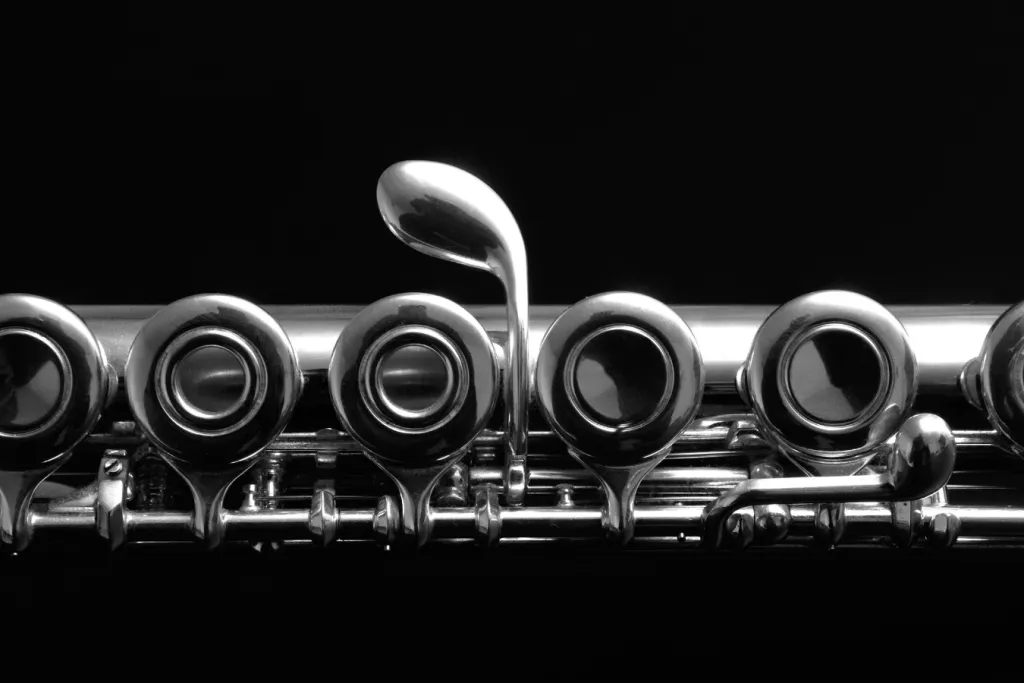
The flute, a captivating musical instrument known for its ethereal sound, has been enchanting listeners for thousands of years. The earliest known flutes, crafted from bone, date back over 40,000 years, suggesting they were among the first instruments created by humans. These ancient instruments were discovered in various sites across Europe and provide a glimpse into their origins and early use by ancient civilizations.
Throughout history, the flute has evolved significantly in design and complexity. The modern Western flute, for example, owes its form to Theobald Boehm’s 19th-century innovations, which introduced a more sophisticated key system, enhancing its range and playability. This evolution reflects not only advancements in technology but also the instrument’s significance in diverse cultures and musical genres, spanning classical, jazz, and world music.
Beyond its structural development, the flute holds cultural and symbolic importance in various societies. In many ancient cultures, it was believed to possess spiritual or mythological powers, often used in ceremonial contexts. This rich cultural tapestry contributes to the flute’s enduring presence and allure in global music history.
Historical Development
The flute has evolved from ancient, simple constructions to the complex instruments of today. This section explores its journey through prehistoric times, its significance in ancient civilizations, innovations during the Renaissance and Baroque periods, and further enhancements in the Classical and modern eras.
Prehistoric Beginnings and Ancient Civilizations
Prehistoric flutes date back over 35,000 years with early examples found in present-day Germany. These instruments were crafted using bone materials, such as bird bones or mammoth ivory, showcasing humankind’s early musical exploration.
During ancient civilizations, flutes played significant roles. In China, nine-holed cane flutes from 8,000 BC represent some of the oldest wind instruments. In Greece, the flute, particularly the aulos, featured prominently in religious rites, often associated with the god Pan. Such historical records highlight the flute’s longstanding cultural importance.
Advancements in the Renaissance Period
The Renaissance period marked significant advances in flute design and usage. During this time, the transverse flute or flauto traverso emerged, offering more versatility and tonal range compared to earlier vertical flutes.
This era also saw an expansion in musical literature for wind instruments, as composers sought to explore their expressive potential. The introduction of key mechanisms started during this period, laying the groundwork for greater precision and easier playing in the future.
Refinement in the Baroque Era
The Baroque era further refined the flute, introducing the baroque flute, which was more sophisticated and capable of producing richer tonal colors.
Constructed typically from wood, it featured a conical bore and often included a single key. This period allowed the flute to establish itself in the orchestras and ensembles of Baroque music. The versatility of the instrument during this era enabled greater expressive capabilities, influencing compositions by renowned musicians.
The Classical Period and Modern Transformations
The Classical period brought additional changes to flute construction and performance. Experimentations with new materials and key configurations were common, enhancing the instrument’s playability and tonal flexibility.
Theobald Boehm, in the 19th century, revolutionized the flute by implementing a comprehensive key system and cylindrical bore, setting the modern standard. These modifications transformed the instrument, expanding its role in classical music. Today, modern flutes continue to build on Boehm’s innovations, incorporating advanced materials and technology to suit contemporary performances and compositions.
Innovations in Flute Design
Significant advancements in flute construction have transformed the instrument, impacting its playability and tonal flexibility. These developments include Theobald Boehm’s contributions and the adaptation of different flute styles, offering players a range of musical expressions.
The Boehm System and Key Mechanism
Theobald Boehm’s impact on flute design cannot be overstated. His innovations in the 19th century introduced a revolutionary key mechanism that enhanced both accuracy and ease of play. This system incorporated larger, strategically placed finger holes on a cylindrical body, allowing for precise intonation and increased range.
Boehm’s design facilitated the development of the modern concert flute, often constructed from metal, which provides greater resonance compared to its wooden predecessors. The newly engineered embouchure hole allowed players to produce a purer tone, supporting a stronger, clearer sound across all registers. Through such enhancements, the Boehm system remains the foundation of contemporary flute construction, resonating in concert halls worldwide.
Variations and Related Instruments
Flute design isn’t limited to the concert flute; various models have emerged, expanding the instrument’s versatility. Instruments like the piccolo and alto flute offer different registers, contributing to diverse musical textures. The piccolo, smaller with a higher pitch, is a staple in orchestral settings, whereas the alto flute provides a deeper timbre, popular in both orchestral and jazz compositions.
Additionally, traditional and ethnic flutes like the shakuhachi or vertical flutes, and even simple instruments like the ocarina and panpipes, showcase diverse construction methods and uses. These instruments vary greatly in terms of material—ranging from wood to metal—and offer a wide array of acoustic properties, highlighting the flute’s adaptability across genres and cultures.
Playing Techniques and Performance
Flute players employ a range of techniques to create expressive and varied performances. Mastery of breath control, precise fingering, and advanced methods like improvisation and multiphonics significantly enhance the musical capabilities of the modern concert flute.
Breath Control and Embouchure
Breath control is crucial for producing a clear, consistent sound on the flute. Players focus on managing their breath to maintain dynamic control and tonal quality across different music genres. The embouchure involves the shape and tension of the lips around the embouchure hole. This positioning is essential for controlling air direction and speed, affecting the flute’s tone and pitch accuracy. Proper embouchure also supports techniques like vibrato, which adds expressiveness to the performance. Fine-tuning these aspects allows players to execute smooth transitions and articulate notes effectively.
Fingering and Articulation
Fingering on the flute involves covering and uncovering finger holes to produce different pitches, including semitones. This requires precise finger movements to execute scales and arpeggios smoothly. Articulation refers to how notes are started and ended, often achieved through tonguing techniques. Players may use single, double, or triple tonguing to articulate quickly and clearly in rapid passages. These techniques enhance the clarity and expression of the music, allowing for fluid melodic lines. Correct fingering combined with adept articulation enables performers to navigate complex musical passages with ease.
Advanced Techniques and Improvisation
Advanced techniques elevate a flute player’s artistry and versatility. Techniques such as flutter tonguing involve rolling the tongue while blowing air, creating a rapid, fluttering effect. Multiphonics allows players to produce multiple notes simultaneously by manipulating fingerings and airflows. This expands the range of textures and harmonics available. Improvisation, while traditionally associated with jazz, is also embraced in other genres, challenging the musician to create spontaneously within a performance. Mastery of these techniques not only enriches the musical repertoire but also provides the player with a broader expressive palette.
The Flute in Ensembles and Solo Performances
The flute, especially the modern concert flute, plays a significant role in both orchestral music and solo performances. It offers a wide range of musical expression, being a versatile and integral instrument in classical music.
Orchestral Use and Solo Repertoire
In orchestras, the flute often provides bright and melodious tones that add depth to the ensemble. Its versatility allows it to blend seamlessly in sections, from subtle woodwind harmonies to prominent solo passages. The modern concert flute is a staple in orchestras, noted for its three-octave range, which is frequently utilized in compositions by prominent composers.
Solo performances reveal a different side of the flute’s capabilities. Renowned for a large repertoire, the flute is featured in concertos by composers like Mozart and Vivaldi. These pieces highlight the expressive potential of the instrument, showcasing its agility and the emotional depth it can deliver. The transverse flute’s evolution from a simple wooden instrument to a sophisticated concert staple underlines its importance in both solo and ensemble settings.
Influential Flute Players
Prominent flute players have significantly shaped flute music’s landscape. Sir James Galway, for instance, is celebrated for his exceptional technique and contributions to the flute repertoire. His interpretations have inspired countless flutists and have elevated the flute’s status in classical music circles.
Galway’s influence is evident in his recordings, which demonstrate the flute’s expressive range and technical possibilities. He’s known for bringing classical flute music to a broader audience, further popularizing the instrument. Other influential players have contributed to the development of modern playing techniques and have expanded the flute’s role in various musical genres. Their impact continues to resonate through both contemporary performances and the teaching of new generations of musicians.