
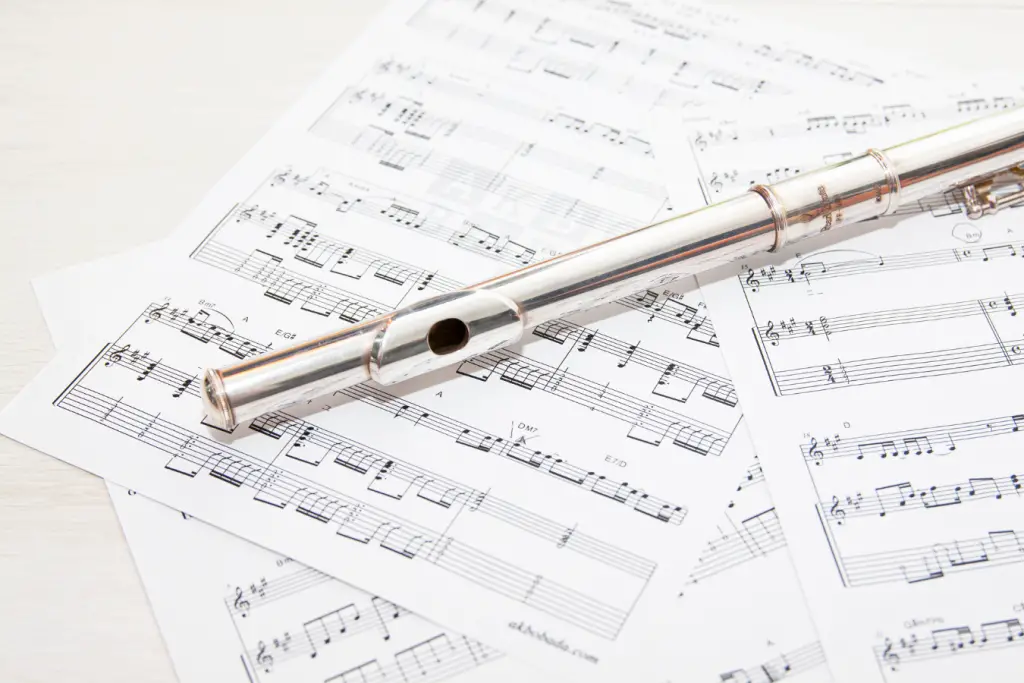
The flute is a unique and enchanting musical instrument characterized by its smooth, clear sound. A flute produces sound through the flow of air across an opening, creating a tone that is often described as bright and pure. This woodwind instrument, unlike others such as the clarinet or oboe, does not rely on a reed. Instead, it uses a series of holes and a tube to create its distinctive melodies.
In orchestral settings, the flute holds a prominent position due to its ability to deliver both subtle and powerful expressions. From the delicate passages to the more forceful notes, the flute can convey a wide range of emotions and musical colors. Listeners are often drawn to its versatility and the way it seamlessly integrates into an ensemble.
Beyond classical music, the flute finds its presence in various music genres, showcasing its adaptability and wide appeal. Its ethereal sound has captivated audiences for centuries and continues to inspire musicians and composers alike. For those curious about the distinct qualities of this instrument, exploring flute acoustics provides an in-depth perspective on how it operates and enhances musical compositions.
The Mechanics of Flute Sound Production
The flute produces sound through the vibration of air columns inside its tube. Key components such as the embouchure hole, lip plate, and keys play crucial roles in shaping its sound. Understanding these elements helps explain the unique characteristics of flute sound production.
Embouchure and Airflow
The embouchure is vital for sound production in a flute. It involves the positioning of the mouth and lips on the lip plate. Players direct a stream of air across the embouchure hole. This action creates vibrations as the air interacts with the hole’s edge. These vibrations produce sound waves within the flute.
The precision of breath control is essential. Small adjustments in angle and strength of the airflow can change pitch and tone. The player’s ability to manipulate air pressure and direction allows for a wide range of dynamics and tonal colors. A controlled breath and well-formed embouchure can create everything from soft, whispering notes to powerful, resonant sounds.
Flute Construction and Sound
The construction of a flute significantly affects the sound it produces. The cylindrical shape, formed by the head joint and foot joint, influences sound waves traveling through it. Materials like silver, gold, or nickel silver can impart distinct tonal qualities to the musical instrument.
Flute sound is also shaped by the placement and function of keys. By opening and closing these keys, a player changes the effective length of the air column. This action allows the musician to produce different pitches. The relationship between the keys and the body of the flute contributes to the overall tonal range and expressiveness, allowing the flute to execute complex musical passages smoothly.
Characteristics of the Flute’s Sound
The flute’s sound is distinguished by its clear tone quality, often described as pure and ethereal. Its sound spectrum is shaped significantly by aspects like pitch and dynamics, as well as timbre and vibrato, each contributing uniquely to its expressive range.
Pitch and Dynamics
The pitch of the flute can range from calm lows to piercing highs. This flexibility allows musicians to express a wide variety of emotions and styles. The control of dynamics, or the volume of sound, is integral to the flute’s expressive capabilities. A skilled flutist can produce sounds that transition smoothly from soft whispers to powerful calls.
Pitch variation is achieved through the placement and movement of the fingers over the instrument’s keys, along with breath control. The dynamic range is facilitated by the flutist’s ability to modify the breath pressure and embouchure, allowing for subtle nuances in volume and tone.
Timbre and Vibrato
The timbre of the flute is often described as silvery and lightweight. This quality is a result of the instrument’s cylindrical shape and material composition, as discussed by AudioLover. The sound can vary from warm and mellow to bright and penetrating, depending on how it is played.
Vibrato, a technique involving slight fluctuations in pitch, adds richness and depth to the flute’s sound. This subtle modulation is produced by varying the air pressure from the diaphragm, creating a pulsating effect that enhances the emotional expression. The combination of timbre and vibrato gives the flute its distinctive and captivating voice.
Flute Performance Contexts
The flute is a versatile instrument with an important role in both chamber music and as a powerful solo instrument. Its unique sound can blend beautifully within ensembles or stand out in solo performances.
Chamber Music and Ensembles
In chamber music, the flute often partners with other instruments, creating intricate musical dialogues. Its clear tone works well in ensembles, providing harmonic overtones that enrich the overall sound. The flute can be paired with strings, piano, or other woodwinds, enhancing the texture and color of the music.
Flutists in chamber ensembles must balance their sound with other instruments, carefully modulating dynamics to maintain musical harmony. The challenge lies in complementing the group while preserving the distinct characteristics of the flute’s sound. This ability to blend yet assert individuality makes it a favorite in chamber music settings.
The Flute as a Solo Instrument
The flute shines brilliantly as a solo instrument, capable of a wide range of expressive tones. Its potential for producing sounds from “silvery” to “fluffy” allows for great emotional expression. Solo flutists often showcase technical skills with fast-paced passages and dynamic control.
Performing as a soloist, the flutist can explore various techniques, creating intricate melodies and demonstrating musical agility. The emotive range and versatility of the flute make it a compelling choice for solo compositions, and its ability to convey diverse feelings helps captivate audiences in performances.