
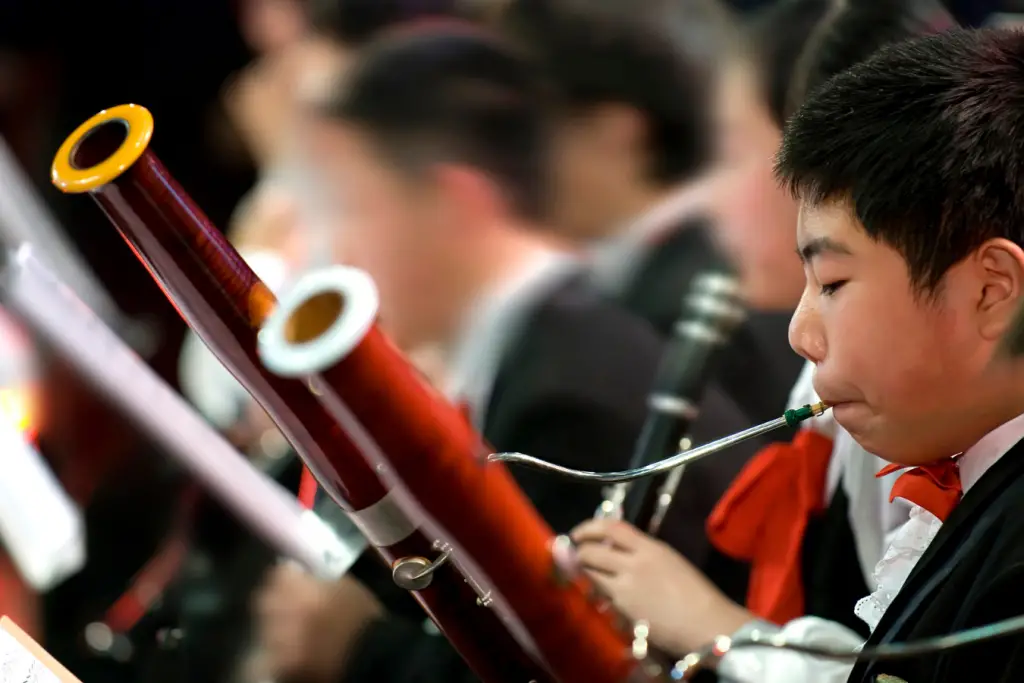
The bassoon, a staple of the woodwind family, is renowned for its warm, resonant sound and remarkable versatility. Often referred to as the “clown of the orchestra” for its humorous capabilities and “the bass of the woodwinds” for its deep voice, the bassoon is much more than either nickname suggests. From its crucial harmonic contributions to its capacity for stunning solo passages, the bassoon is an indispensable instrument that enhances orchestral music in subtle and profound ways.
A Brief Introduction to the Bassoon
Before exploring its role in the orchestra, let’s quickly review the bassoon’s key characteristics:
- Classification: Double-reed woodwind instrument.
- Range: Extends from B♭1 (just below the bass clef) to E5 (above the treble clef).
- Size and Design: Nearly 9 feet of conical tubing, folded into a manageable shape.
- Timbre: A unique blend of warmth, richness, and agility, with the ability to evoke both humor and solemnity.
In an orchestra, the bassoon is typically played by two or more musicians:
- Principal Bassoonist: Takes the lead on solos and complex melodic lines.
- Second Bassoonist: Focuses on providing harmonic support and rhythmic precision.
Some larger works may also include a contrabassoon, an even lower-pitched relative of the bassoon.
The Bassoon’s Essential Roles in an Orchestra
1. The Harmonic Foundation
One of the bassoon’s primary responsibilities is to provide a solid harmonic base.
- Bass Line Support: The bassoon often doubles the cello or double bass parts, reinforcing the orchestra’s lower register and creating a resonant foundation.
- Bridging Sections: Positioned as the link between woodwinds and strings, the bassoon blends the bright timbre of higher woodwinds with the rich sound of the strings.
- Orchestral Depth: Its ability to blend seamlessly enhances the ensemble’s overall richness and tonal balance.
Example: In Beethoven’s Symphony No. 5, the bassoon underpins the orchestra during climactic moments, anchoring the harmony with a steady, resonant tone.
2. A Melodic Voice of Emotion
Though primarily known for its bass capabilities, the bassoon is often given significant melodic responsibilities.
- Expressive Solos: The bassoon’s wide range allows it to sing as a solo instrument, capable of conveying emotions ranging from playful mischief to deep sorrow.
- Virtuosity: Demands on the instrument often highlight its agility and technical capabilities, particularly in rapid passages.
- Iconic Melodies:
- Stravinsky’s The Rite of Spring: The opening solo demonstrates the bassoon’s ability to evoke a haunting, ethereal quality.
- Mozart’s Bassoon Concerto in B♭ Major: A showcase of the instrument’s lyrical and virtuosic potential.
3. Rhythmic Drive and Precision
The bassoon plays a critical role in maintaining the orchestra’s rhythm, particularly in fast or complex movements.
- Syncing with the Ensemble: As part of the woodwind and lower string sections, the bassoon helps establish and maintain tempo.
- Articulation and Clarity: Short staccato notes and crisp articulation add rhythmic precision, especially in lively movements.
- Navigating Complex Passages: Bassoon parts often feature intricate rhythms that require both technical mastery and an acute sense of timing.
Example: In Tchaikovsky’s 1812 Overture, the bassoon drives the rhythmic energy, balancing intricate passages with bold harmonic contributions.
4. Humor and Character
Few instruments rival the bassoon when it comes to adding humor and charm to orchestral music.
- Comedic Effects: The bassoon’s ability to leap between registers and its distinctive tone make it perfect for lighthearted or whimsical moments.
- Juxtaposition: Composers often contrast its low, serious timbre with sudden high-pitched passages for comedic effect.
- Famous Examples:
- In Prokofiev’s Peter and the Wolf, the bassoon portrays the grumpy grandfather, using its deep, resonant tone to comedic effect.
- Dukas’ The Sorcerer’s Apprentice features playful bassoon passages that evoke a sense of mischief.
Collaborations with Other Instruments
1. In the Woodwind Section
The bassoon is a critical member of the woodwind family, enhancing its overall texture and sound.
- Flutes and Oboes: Adds warmth and depth to higher-pitched melodies.
- Clarinets: Complements the clarinet’s bright tone with its darker timbre, creating a balanced sound.
- Woodwind Harmony: Plays a vital role in building complex harmonic layers.
2. With the Strings
- Cellos and Double Basses: Often doubles their parts, reinforcing the lower harmonies.
- Violas: Collaborates with violas to create rich, mid-range textures.
- Solo Dialogues: Engages in melodic exchanges with strings, adding contrast and depth.
3. With the Brass
- Bridging Sections: The bassoon connects the brightness of brass instruments with the woodwinds’ mellower tone.
- Reinforcing Low Brass: Partners with trombones and tubas for powerful moments, particularly in symphonic climaxes.
Orchestral Repertoire Showcasing the Bassoon
The bassoon has played a starring role in some of the greatest orchestral works:
- Tchaikovsky’s Nutcracker Suite: The bassoon shines in “Dance of the Sugar Plum Fairy,” adding a hauntingly delicate sound.
- Ravel’s Boléro: The bassoon’s seamless transitions contribute to the piece’s hypnotic buildup.
- Shostakovich’s Symphony No. 9: A prominent bassoon solo demands both technical mastery and emotional nuance.
Mastering the Bassoon in an Orchestral Setting
1. Blend and Balance
- Listen Actively: Ensure your sound integrates seamlessly with the ensemble.
- Control Dynamics: Adjust your volume to match the orchestra, particularly during softer passages.
2. Solo Preparation
- Emphasize Expression: Focus on phrasing and tone to bring out the emotional depth of solo passages.
- Confidence and Precision: Practice exposed parts until they feel second nature.
3. Rhythmic Cohesion
- Work with the Conductor: Maintain eye contact to stay aligned with the ensemble’s tempo.
- Break Down Complexities: Divide challenging rhythms into smaller segments for clarity.
The Bassoon in Contemporary Music
Modern compositions have expanded the bassoon’s role and techniques, ensuring its continued relevance in the orchestra:
- Extended Techniques: Modern works often call for multiphonics, pitch bends, and flutter-tonguing.
- Electronic Enhancements: Amplified bassoons and electronic effects are being explored for innovative tonal possibilities.
- Cross-Genre Presence: The bassoon is increasingly featured in film scores, jazz, and contemporary chamber ensembles.
Conclusion: An Indispensable Voice in the Orchestra
The bassoon is far more than a low voice in the orchestra. It is a versatile, expressive instrument capable of anchoring harmony, providing rhythmic drive, and delivering unforgettable melodies. Its unique tone and ability to blend with other sections make it a cornerstone of orchestral music. Whether playing a profound solo, a humorous interlude, or a foundational bass line, the bassoon enriches the orchestra with its distinctive character and versatility.