
The bassoon is a unique and challenging instrument that requires precision and practice to master. Whether you’re a beginner or an experienced player, there are always ways to improve your sound and technique. This article will guide you through various strategies to enhance your bassoon performance, covering aspects such as tone production, embouchure, finger technique, and overall musicianship.
Understanding the Importance of Sound and Technique
Before diving into the specific tips, it’s important to understand why sound and technique are so vital for bassoon players:
- Sound quality is essential for expressive playing, whether in solos or ensemble settings.
- Proper technique ensures that you can produce a clean, accurate, and musical sound. It also helps to prevent physical strain and injuries, which are common for wind instrument players.
1. Focus on Your Embouchure
The embouchure is the way your mouth interacts with the reed and mouthpiece. A strong embouchure is crucial for producing a clear, resonant tone on the bassoon. Here’s how you can refine your embouchure:
- Relax your facial muscles: Tension in your lips or cheeks can prevent smooth airflow and result in a weak or squeaky sound.
- Form the correct lip position: Your lips should be slightly rolled over your teeth, creating a firm yet flexible seal around the reed. This allows for better control of the airflow and tone production.
- Engage your corners: Use your lip corners to stabilize the reed without over-tightening your embouchure. The reed should vibrate freely to produce a rich tone.
- Avoid puffing your cheeks: This can cause air to escape unevenly and hinder your sound production. Keep your cheeks in check to ensure consistent airflow.
Tips for Improving Embouchure:
- Practice long tones, focusing on evenness and control.
- Try playing scales and simple melodies while keeping your embouchure relaxed but firm.
- Regularly check your embouchure in a mirror to ensure you’re maintaining proper form.
2. Mastering Breath Support
Proper breath control is key to playing the bassoon with strength and stability. Good breath support helps you control your sound, maintain a steady tone, and avoid running out of air mid-phrase.
- Breathe from your diaphragm: Use deep belly breaths to fill your lungs, rather than shallow chest breaths. This will give you more air capacity and better control.
- Control the release of air: Avoid letting your air escape too quickly. Instead, try to direct your airflow evenly and steadily, as though you’re “supporting” the note with air.
- Maintain consistent air pressure: A steady, constant stream of air ensures that the reed vibrates consistently, producing a clean and strong tone.
Breathing Exercises:
- Practice breathing in for four counts, holding for four counts, and exhaling for eight counts. This will help build control over your breath.
- Use a metronome to practice long, steady tones, making sure to focus on air support throughout the phrase.
3. Improve Your Finger Technique
Bassoon playing involves complex finger movements, and proper finger technique is crucial for smooth, clean playing. Whether you’re playing fast passages or slow melodies, maintaining good technique is essential for accuracy and fluidity.
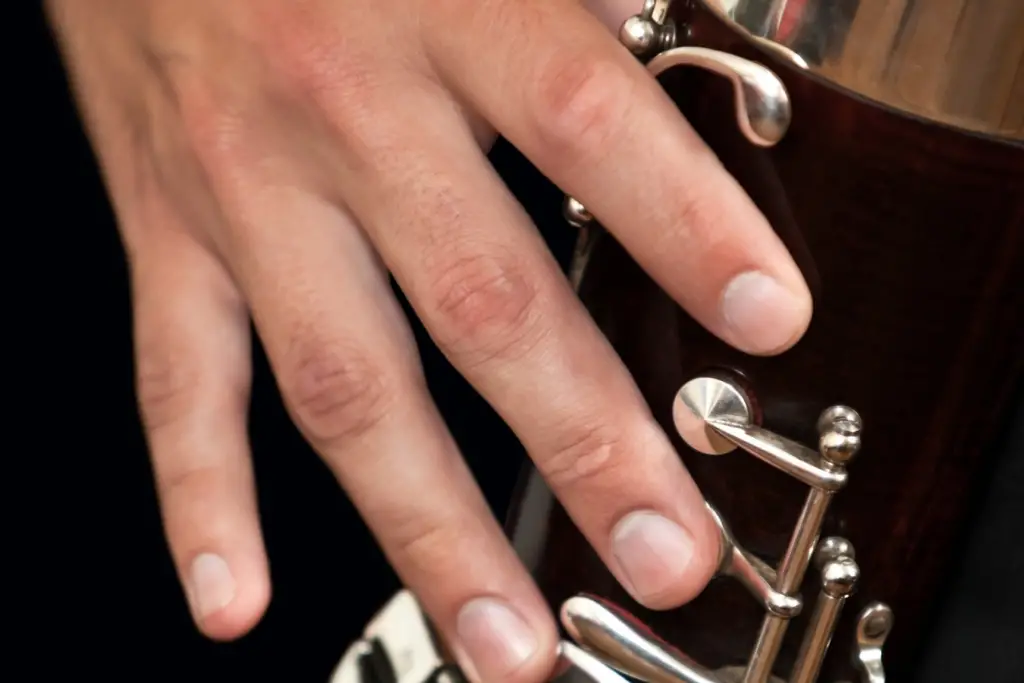
- Proper hand positioning: Keep your hands relaxed and avoid tension. Your fingers should hover over the keys, using the pads of your fingers to press down the keys.
- Fingering accuracy: Pay attention to how you finger each note, ensuring that your fingers are fully pressing the correct keys and not accidentally muting other notes.
- Smooth finger transitions: Practice moving between notes without lifting your fingers too far off the keys. This will help prevent unwanted pauses or gaps in the sound.
Finger Exercises:
- Practice scales and arpeggios slowly to ensure smooth transitions between notes.
- Focus on finger coordination by playing simple pieces that require rapid note changes.
- Use a metronome to keep your timing consistent while working on difficult fingerings.
4. Develop Your Tone Quality
The bassoon is capable of producing a wide range of tones, from smooth, lyrical notes to sharp, aggressive ones. Developing a solid tone is essential to becoming a well-rounded player. Here’s how to improve your tone:
- Work on tone consistency: Aim to produce a consistent sound across all registers. A good tone should remain stable and clear, whether you’re playing low, middle, or high notes.
- Focus on the lower register: The bassoon’s lower notes can be challenging, but they are also some of the most expressive. Practice long tones in the lower register, ensuring that they sound full and stable.
- Refine the upper register: The bassoon’s higher notes tend to be more fragile, but with proper embouchure and air support, you can achieve a bright, clear sound in the upper register.
Tone Development Exercises:
- Play long tones in various dynamics, focusing on keeping your sound even across all volumes.
- Record yourself and listen for inconsistencies in your tone. Work on smoothing out any wavering or unstable sounds.
- Practice dynamic contrasts, such as going from soft to loud, while maintaining a steady, clear tone.
5. Ear Training and Intonation
Improving your intonation (pitch accuracy) is vital for blending with an ensemble and performing solo. Bassoon players must constantly monitor their pitch, as it can vary depending on reed quality, embouchure, and air support.
- Use a tuner: Regularly practice with a tuner to ensure you’re playing in tune. Check your intonation both on long tones and throughout the scales.
- Develop your ear: Learn to identify when you’re out of tune by listening carefully to the sound you’re producing. Over time, you’ll be able to make subtle adjustments without relying on a tuner.
- Match pitch with other instruments: When playing in an ensemble, listen carefully to the other instruments and adjust your pitch to match the group.
Intonation Exercises:
- Practice tuning exercises, such as playing scales slowly and adjusting your pitch as needed.
- Record yourself playing along with piano or other instruments to hear how your intonation matches.
- Experiment with different reeds to see how they affect your pitch and overall sound.
6. Expanding Musicality
Finally, becoming a great bassoonist involves more than just technical proficiency. Developing musicality is essential for delivering expressive, engaging performances.
- Work on phrasing: Practice playing in musical phrases, just like speaking in sentences. Think about how each phrase begins, develops, and resolves.
- Add dynamics and articulation: Vary your volume and articulation to create more interest in your playing. Use legato, staccato, accents, and dynamics to express different emotions and styles.
- Experiment with different styles: Try playing pieces from various genres (classical, baroque, contemporary) to expand your musical vocabulary and versatility.
Musicality Exercises:
- Practice playing phrases from different pieces, focusing on shaping the musical lines and adding expressive nuances.
- Play through a simple piece, and experiment with changing the dynamics, articulation, and overall interpretation to bring out different moods.
- Record yourself playing and listen back to see if your phrasing and dynamics are effective in conveying emotion.
Conclusion
Improving your bassoon sound and technique takes time and consistent effort, but the rewards are well worth it. By focusing on elements such as embouchure, breath support, finger technique, tone quality, intonation, and musicality, you can steadily improve as a bassoonist. Remember, practice makes perfect, but mindful, intentional practice is the key to making real progress. Stay patient, persistent, and always strive to bring the best sound you can to the instrument.