
Improving piccolo tone requires dedication and specific techniques. Many flutists find the transition to piccolo challenging due to its smaller size and higher pitch range. The key lies in adapting one’s approach to air support and embouchure placement.
To enhance piccolo tone, players should focus on using a firm, concentrated air stream with strong support but less air volume than required for the flute. This technique helps avoid a harsh or brassy sound that can result from overblowing. Additionally, placing the piccolo higher on the bottom lip can improve tone production by aligning the embouchure hole slightly forward.
Regular practice of long tone exercises tailored for piccolo can significantly improve overall sound quality. These exercises allow players to develop control over their air stream and embouchure, resulting in a more refined and pleasing tone across the instrument’s range. With consistent effort and attention to these fundamental aspects, piccolo players can achieve a rich, resonant sound that complements any ensemble.
Understanding the Piccolo
The piccolo is a small yet powerful woodwind instrument closely related to the flute. Its unique design and playing characteristics set it apart, requiring specific techniques to master.
Anatomy of the Piccolo
The piccolo consists of three main parts: the headjoint, body, and footjoint. The headjoint contains the embouchure hole where the player blows air. This hole is smaller than that of a flute, requiring more precise embouchure control.
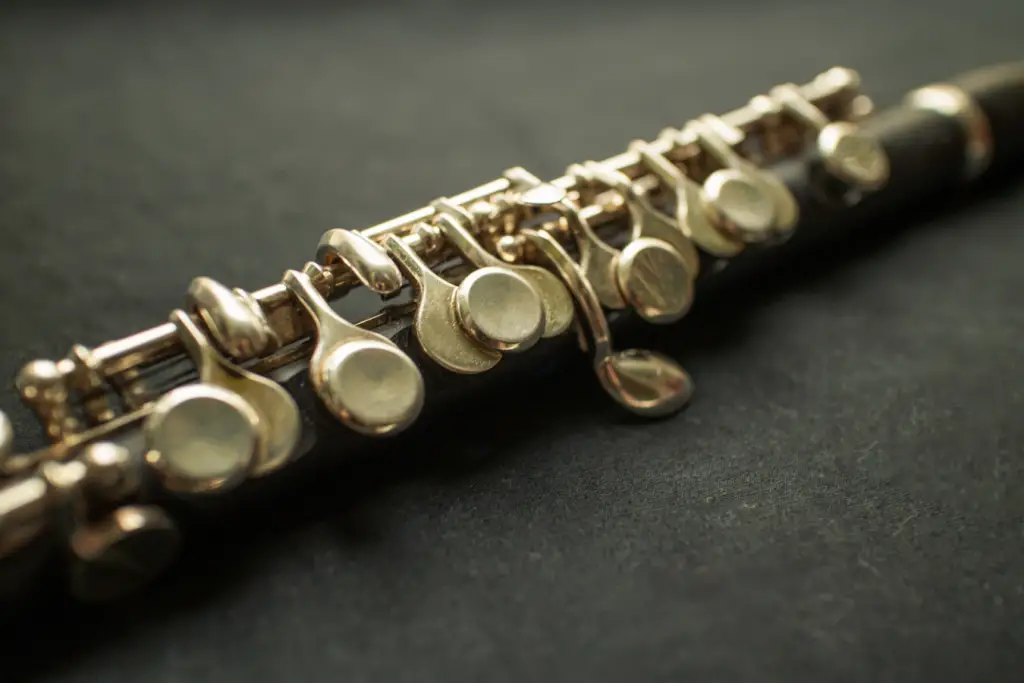
The body houses the key mechanism, which is similar to a flute but scaled down. Piccolos typically have 6 open holes and a closed-key system. Some models feature a split E mechanism for improved intonation.
The footjoint is shorter than a flute’s, ending at the D or C key. Piccolo fingerings can differ slightly from flute fingerings, especially in the highest register.
Most piccolos are made of wood, often grenadilla or cocobolo, though some are constructed from metal or plastic. The material affects the instrument’s tone and response.
Piccolo vs. Flute Differences
While the piccolo and flute share similarities, they have distinct differences. The piccolo is pitched an octave higher than the flute, producing a brighter, more piercing sound. Its smaller size requires stronger support but less air volume for proper tone production.
The embouchure for piccolo playing is generally smaller and more focused than for flute. Players must maintain a firm yet relaxed embouchure to achieve a clear tone without sounding harsh or brassy.
Intonation on the piccolo can be more challenging due to its higher pitch. Small adjustments in embouchure or breath support can have a significant impact on pitch accuracy.
The piccolo’s dynamic range is more limited than the flute’s, particularly in the lower register. However, it excels in projecting melodies and high passages in ensemble settings.
Fundamentals of Tone Production
Producing a beautiful tone on the piccolo requires mastering key techniques. These include proper breath control, embouchure formation, and articulation skills.
Breath Control and Support
Tone production on the piccolo relies on strong support with a concentrated airstream. Players should focus on speed and compression rather than volume of air.
Use a firm, focused air column to avoid a harsh or brassy sound. Think of blowing through a small straw to create the proper air pressure and speed.
Diaphragmatic breathing is essential. Inhale deeply, expanding the lower abdomen, then exhale steadily while engaging the core muscles.
Practice long tones to develop breath control. Start with low register notes and gradually move higher, maintaining consistent air support throughout.
Embouchure Formation
A proper embouchure directs the airstream efficiently into the headjoint. The embouchure for piccolo is similar to flute but requires some adjustments.
Place the piccolo higher on the lower lip than you would a flute. This helps align the embouchure hole slightly forward.
Keep the aperture small and focused. Avoid covering too much of the embouchure hole due to the instrument’s smaller size.
For lower notes, think of allowing more air to flow. For higher notes, increase lip tension and air speed while keeping the aperture small.
Practice flexibility exercises to develop control over all registers. Move between octaves smoothly while maintaining consistent tone quality.
Articulation Techniques
Clear articulation is crucial for expressive piccolo playing. The tongue should lightly touch the roof of the mouth behind the upper teeth.
Use “tu” or “du” syllables for single-tonguing. Practice double-tonguing with “tu-ku” or “du-gu” for faster passages.
Start with slow, deliberate articulations and gradually increase speed. Focus on maintaining consistent tone quality between articulated and slurred notes.
Experiment with different articulation styles:
- Legato: Smooth and connected
- Staccato: Short and detached
- Marcato: Accented and emphasized
Practice scales and arpeggios with various articulation patterns to develop flexibility and control.
Advanced Tone Enhancement
Mastering advanced tone techniques on piccolo requires focused practice and attention to detail. These methods can take your playing to the next level, allowing for greater expressiveness and control.
Vibrato Usage
Vibrato adds depth and warmth to piccolo tone. Start with a slow, wide vibrato and gradually increase speed while narrowing the pitch fluctuation. Practice using a firm but relaxed embouchure to maintain control.
Experiment with different vibrato speeds and widths to suit various musical styles. In orchestral settings, use vibrato sparingly and match the flute section. For solo passages, a more pronounced vibrato can enhance expressiveness.
Develop the ability to start and stop vibrato smoothly within phrases. This skill allows for more nuanced interpretations and helps highlight important melodic moments.
Dynamic Control
Achieving a wide dynamic range on piccolo requires precise air control. Practice long tones, focusing on maintaining consistent pitch and tone quality while changing volume.
Use a concentrated air stream for softer dynamics, thinking of speed and support rather than air quantity. For louder passages, increase air support from the diaphragm without overblowing.
Work on seamless crescendos and diminuendos across all registers. Pay special attention to the challenging third octave, where intonation and tone can easily suffer during dynamic changes.
Color and Timbre Modification
Explore various tone colors by adjusting embouchure shape and air direction. Experiment with a more focused, brighter sound for projecting melodies and a softer, rounder tone for blending in ensemble settings.
Practice harmonics exercises to develop flexibility in manipulating overtones. This skill enhances overall tone control and helps in achieving different timbres.
Use alternate fingerings to modify timbre when appropriate. For example, try the C# trill key to darken the tone on certain notes in the high register.
Experiment with different head joint positions to find the optimal placement for your desired tone quality. Small adjustments can significantly impact the instrument’s resonance and projection.
Practice and Maintenance
Consistent practice routines, targeted exercises, and proper instrument care are essential for improving piccolo tone. These elements work together to enhance your playing technique and maintain your instrument’s optimal condition.
Daily Practice Routines
Establish a structured daily practice regimen to refine your piccolo skills. Begin with warm-up exercises to prepare your embouchure and breath support. Focus on scales and arpeggios to improve finger dexterity and intonation.
Incorporate etudes from respected piccolo method books to address specific technical challenges. The Piccolo Study Book by Patricia Morris offers short tone warmups and varied etudes suitable for piccolo practice.
Dedicate time to repertoire practice, working on both solo pieces and orchestral excerpts. Record yourself regularly to assess your progress and identify areas needing improvement.
Long-Tone Exercises
Long-tone exercises are crucial for developing a rich, centered piccolo tone. Start with middle register notes, focusing on producing a clear, steady sound. Gradually extend to lower and higher registers.
Practice tone production techniques specific to piccolo. Use a firm, concentrated air stream with strong support but less air volume than flute playing. This approach helps avoid a harsh or brassy tone caused by excessive air.
Incorporate dynamic control exercises, maintaining consistent tone quality while varying volume. Use a tuner to monitor pitch stability during long tones, as intonation is critical on piccolo.
Piccolo Care and Handling
Proper maintenance is vital for preserving your piccolo’s optimal performance. Clean the instrument after each use with a soft, lint-free cloth to remove moisture and prevent pad damage.
Store the piccolo in its case when not in use, avoiding extreme temperatures and humidity. Regularly check for loose screws or springs and address any mechanical issues promptly.
Schedule annual professional maintenance to ensure proper adjustment and address wear and tear. Handle the piccolo gently, especially when assembling and disassembling, to prevent damage to keys and joints.