
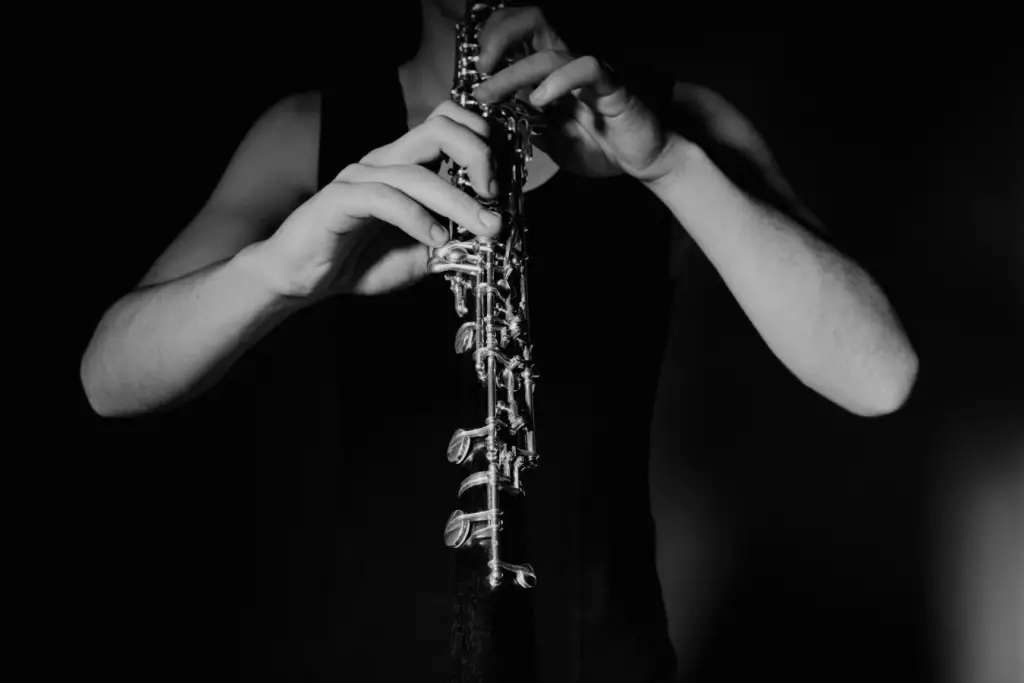
The oboe’s distinctive sound comes from its unique mouthpiece: a double reed. This small but crucial component consists of two thin pieces of cane vibrating against each other when blown. The oboe uses a double reed because it produces a rich, penetrating tone that can cut through an orchestra while offering precise control over pitch and dynamics.
Double reeds are made by strapping two pieces of cut cane to a metal pipe. When air passes between these cane blades, they vibrate rapidly, creating the oboe’s characteristic sound. The size and shape of the reed are carefully crafted to match the instrument and player’s needs.
The double reed design allows oboists to manipulate the sound with great sensitivity. By adjusting embouchure and air pressure, players can alter pitch, volume, and tone color with remarkable precision. This level of control makes the oboe ideal for expressive melodies and solos within orchestral settings.
Historical Development of the Oboe
The oboe‘s journey through history reveals a fascinating evolution of design and musical capabilities. Its development intertwines with broader advancements in wind instruments and double reed technology.
Origins of Wind Instruments
Wind instruments have ancient roots, with early forms dating back thousands of years. Double reed instruments similar to the oboe appeared in various cultures worldwide. In ancient Egypt, Greece, and Rome, musicians played double reed instruments called aulos or tibia.
These early versions laid the groundwork for later developments. They typically had a cylindrical bore and produced a loud, piercing sound ideal for outdoor ceremonies and military functions.
Evolution of the Double Reed
The double reed itself underwent significant changes over time. Early reeds were often made from simple plant materials like grass or straw. As craftsmen refined their techniques, they began using more sophisticated materials.
By the medieval period, instrument makers were crafting reeds from cane, similar to modern oboe reeds. This material allowed for greater control over tone and pitch. The shawm, a precursor to the oboe, utilized these improved reeds.
The Baroque Oboe
The baroque era saw the birth of the oboe as we know it today. Around 1650, French instrument makers refined the shawm, creating a more mellow and expressive instrument. This new oboe had a conical bore and a gentler tone suitable for indoor performances.
Key features of the baroque oboe included:
- Two keys (compared to modern oboes’ numerous keys)
- A range of about two and a half octaves
- A more focused, less piercing sound than its predecessors
Composers like Bach and Handel embraced the oboe, writing numerous pieces featuring its distinct voice.
Advancements in the Classical Period
The classical period brought further refinements to the oboe’s design. Instrument makers added more keys, expanding the oboe’s range and improving its intonation. The bore’s shape was adjusted, enhancing tonal quality and projection.
Notable developments included:
- The addition of the octave key, facilitating higher register playing
- Improvements in key mechanisms for smoother fingerings
- Experimentation with different wood types for better resonance
These advancements allowed classical composers to write more challenging and expressive music for the oboe. The instrument’s role in orchestras and chamber ensembles continued to grow throughout this period.
Anatomy of the Double Reed
The double reed is a crucial component of the oboe, contributing to its distinctive sound. Its unique structure and materials work together to produce vibrations that create the instrument’s characteristic tone.
Reed Construction
The double reed consists of two pieces of cane pressed tightly together. These pieces are carefully shaped and bound to form a small, elongated oval. The reed’s tip is extremely thin, allowing it to vibrate rapidly when air passes through.
Oboists often craft their own reeds, a process that requires considerable skill and precision. The exact shape and dimensions of the reed can vary slightly based on the player’s preferences and the specific oboe model.
Materials and Mechanics
Cane, typically from the Arundo donax plant, is the primary material used in double reed construction. This natural material offers the ideal combination of flexibility and strength required for reed performance.
The reed is inserted into the oboe’s reed socket, which holds it securely in place. The size and shape of the reed vary depending on the specific type of double-reed instrument. Oboe reeds are generally narrower than those used for bassoons.
Vibratory Function
When a player blows into the double reed, the two pieces of cane vibrate against each other. This vibration creates sound waves that travel through the instrument’s body.
The double reed design allows for greater control over pitch and tone compared to single-reed instruments. By adjusting embouchure and air pressure, oboists can manipulate the reed’s vibration to produce a wide range of notes and tonal qualities.
The reed’s unique structure also contributes to the oboe’s distinctive timbre, characterized by its rich, penetrating sound.
The Role of the Oboe in Orchestras
The oboe holds a crucial position in orchestras, serving multiple important functions. Its distinctive timbre and technical capabilities make it invaluable for tuning, solo performances, and ensemble work.
Tuning and Leading
The oboe plays a central role in tuning the orchestra. Before each performance, the principal oboist sounds a sustained A note, typically at 440 Hz. This provides a reference pitch for other instruments to tune to.
The oboe’s clear, stable tone makes it ideal for this task. Its sound cuts through the ensemble, allowing all musicians to hear it clearly. The instrument’s limited tuning range also contributes to pitch stability.
In addition to tuning, the oboe often leads entries in orchestral works. Its penetrating timbre helps guide other instruments, especially in passages where precise timing is crucial.
Solo and Ensemble Uses
The oboe frequently takes on solo roles within orchestral compositions. Composers often choose it for expressive, lyrical melodies due to its distinctive voice-like quality.
In ensemble settings, the oboe typically plays the highest voice in the woodwind section. It blends well with other woodwinds while maintaining its unique tonal color.
Many orchestral works feature prominent oboe parts, showcasing the instrument’s technical and expressive capabilities. These parts often require great skill and control from the performer.
Oboe Repertoire
The oboe’s orchestral repertoire spans various musical periods and styles. Baroque composers like Bach and Handel wrote significant oboe parts in their orchestral works and concertos.
Classical era composers, including Mozart and Beethoven, expanded the oboe’s role. They wrote challenging solo passages and gave the instrument more prominence in symphonic works.
Romantic and modern composers further explored the oboe’s expressive potential. Works by Brahms, Tchaikovsky, and Ravel feature memorable oboe solos that have become staples of the orchestral repertoire.
Contemporary composers continue to write for the oboe, often pushing the boundaries of its technical and tonal possibilities in orchestral settings.
Playing Techniques and Challenges
Playing the oboe requires mastering several unique techniques and overcoming specific challenges. The double reed mechanism demands precise control of embouchure, air support, and intonation, while regular reed maintenance is crucial for optimal performance.
Embouchure and Air Support
The oboe’s double reed mechanism necessitates a specialized embouchure. Players must form their lips around the reed in a specific way to produce the instrument’s characteristic sound. This technique involves curling the lips inward and applying gentle pressure to control the reed’s vibration.
Air support is equally critical. Oboists must maintain consistent air pressure to sustain notes and control dynamics. This requires strong breath control and diaphragm support.
The small aperture of the reed demands precise airflow management. Players often use circular breathing to maintain continuous sound during long phrases.
Control and Intonation
Achieving proper intonation on the oboe can be challenging due to its sensitive nature. Small changes in embouchure or air pressure can significantly affect pitch.
Players must develop acute listening skills and the ability to make quick adjustments. Finger placement and pressure on the keys also influence intonation.
Mastering the oboe requires exceptional control over these variables. Oboists spend years refining their technique to produce consistent, in-tune notes across the instrument’s range.
Reed Maintenance and Adjustment
Reed maintenance is a crucial aspect of oboe playing. The delicate nature of double reeds requires regular care and adjustment.
Players often make their own reeds, a process that demands skill and precision. This involves shaping cane, binding it to a metal staple, and carefully scraping the reed to achieve the desired response and tone.
Reeds must be regularly moistened and stored properly to maintain their shape and playing quality. Environmental factors like temperature and humidity can affect reed performance, requiring players to make constant adjustments.
Technological Innovations in Oboe Design
Oboe design has evolved significantly over time, incorporating key mechanisms, acoustic improvements, and modern materials. These innovations have enhanced the instrument’s playability, sound quality, and overall performance capabilities.
Key Mechanisms
The Bohm key system, originally developed for flutes, was adapted for oboes to improve fingering and intonation. This system introduced a more logical arrangement of keys and holes, allowing for greater technical facility.
The Conservatoire system, developed in France, further refined key placement and mechanics. It introduced covered keys and additional rollers, enabling smoother transitions between notes.
Automatic octave keys were introduced to simplify playing in higher registers. These mechanisms automatically close or open certain keys when specific notes are played, reducing the need for complex fingerings.
Acoustic Improvements
Bore design has been refined to optimize resonance and projection. Subtle changes in the instrument’s internal dimensions have led to improved tonal quality and intonation across all registers.
The shape and size of tone holes have been carefully calibrated to enhance sound production and tuning. This has resulted in a more even scale and improved dynamic control.
Refinements in reed design have also contributed to acoustic improvements. The double reed’s shape and dimensions have been optimized to produce a more focused and responsive sound.
Modern Materials and Fabrication
While traditional oboes are typically made from grenadilla wood, synthetic materials like plastic and resin have been introduced for student models. These materials offer durability and resistance to climate changes.
Advanced manufacturing techniques, including computer-aided design and CNC machining, have improved the precision and consistency of oboe production. This has led to more reliable instruments with better intonation.
Metal components, such as keys and rods, now benefit from modern alloys and plating techniques. These innovations have increased durability and reduced maintenance requirements while maintaining the instrument’s aesthetic appeal.
Cultural Significance
The oboe’s double reed has played a vital role in shaping musical traditions worldwide. Its distinctive sound has symbolic meaning in various cultures and contributes uniquely to diverse musical genres.
Oboe in World Music
The oboe’s double reed has found its place in musical traditions beyond Western classical music. In North Africa, the zurna, a double-reed instrument similar to the oboe, is used in traditional ensembles. Its piercing tone cuts through percussion, making it ideal for outdoor celebrations.
Indian classical music features the shehnai, another oboe-like double-reed instrument. It is considered auspicious and often played at weddings and temple ceremonies. The nadaswaram of South India, with its powerful double reed, is essential in Hindu temple music and processions.
In China, the suona’s double reed produces a bright, high-pitched sound crucial in folk music ensembles. Its penetrating tone makes it a staple in outdoor performances and festivals.
Symbolic Uses
The oboe’s double reed has acquired symbolic significance in various contexts. In Western orchestras, the oboe gives the tuning note A to the entire ensemble before performances. This tradition highlights the instrument’s stability and purity of tone.
Some cultures associate the oboe’s sound with spiritual or emotional states. In certain Middle Eastern traditions, double-reed instruments are believed to induce trance-like states during religious ceremonies.
The oboe’s ability to mimic human voices has led to its use in programmatic music to represent characters or emotions. Composers often employ its expressive tone to convey melancholy or pastoral scenes in orchestral works.
Educational Aspects
Learning to play the oboe presents unique challenges due to its double reed mechanism. Effective pedagogical approaches are crucial for mastering this complex instrument.
Learning to Play the Oboe
The oboe’s double reed requires specific techniques to produce sound. Students must learn proper embouchure formation, breath control, and finger positioning.
Beginners often struggle with reed management. They need to understand how to care for, adjust, and eventually make their own reeds. This skill is essential for advanced playing.
Developing consistent tone quality is a key focus. Players must balance air pressure and embouchure tension to achieve the oboe’s characteristic sound.
Intonation poses another challenge. The oboe’s sensitivity to breath and embouchure changes demands precise control and constant listening.
Pedagogical Methods
Effective oboe instruction typically begins with reed preparation and care. Teachers demonstrate proper reed soaking, storage, and basic adjustments.
Breath support exercises are fundamental. Students practice diaphragmatic breathing and controlled exhalation to support the oboe’s high back-pressure.
Fingering drills focus on accuracy and speed. Teachers may use etudes and scale exercises to build finger dexterity and muscle memory.
Tone production exercises help students develop a clear, centered sound. Long tones and octave jumps are common practice techniques.
Ensemble playing is introduced to develop pitch awareness and blending skills. Playing with piano or in small groups helps students refine their intonation and balance.