
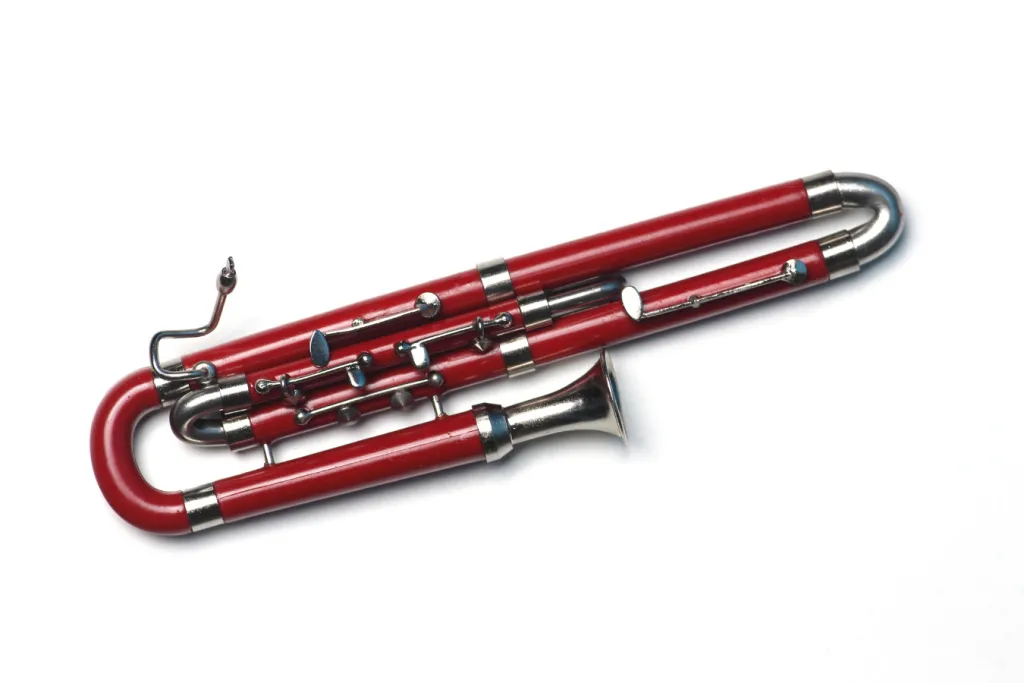
The bassoon is a fascinating instrument that belongs to the woodwind family, known for its deep, resonant tone and rich history. It’s one of the largest and most versatile woodwind instruments, frequently used in orchestras, concert bands, and even chamber ensembles. This article will delve into what the bassoon is, how it works, its history, and its role in modern music.
What is a Bassoon?
The bassoon is a large, double-reed woodwind instrument, part of the larger family of wind instruments that use a reed to produce sound. It is the bass member of the woodwind family, providing a distinctive low range, though it can also reach higher pitches. Traditionally made from wood, particularly grenadilla wood, the bassoon’s body consists of several components that work together to produce its characteristic sound.
Key Parts of the Bassoon:
- Reed: The double reed is what creates the sound by vibrating when air is blown through it.
- Bocal: A curved metal tube that connects the reed to the body of the bassoon.
- Body: The long wooden tube is folded in a zigzag shape for easier handling.
- Keys: These cover the tone holes along the instrument, allowing the player to adjust the pitch.
How Does the Bassoon Work?
The process of sound production in the bassoon involves a combination of air, reed vibrations, and key mechanics. Here’s how the bassoon works from a technical standpoint:
1. The Double Reed
- What is it?: The reed is a small piece of cane that is split into two halves and bound together. When air passes between them, they vibrate, producing sound.
- How it Works: The bassoonist places the reed in their mouth and blows air through it. As the air passes through the reed, it vibrates, creating sound waves that travel through the instrument.
2. Air and Embouchure
- Air: The air pressure required to play the bassoon is quite substantial, and the player must use their diaphragm to control airflow.
- Embouchure: The embouchure is how the player positions their lips around the reed. Proper control is needed to prevent excessive pressure on the reed, which can distort the sound.
3. Finger Technique and Keys
- Keys: The bassoon has a complex key system that allows the player to open and close tone holes along the tube. By covering and uncovering these holes, the pitch changes.
- Finger Technique: The player uses their fingers to manipulate the keys and adjust the pitch. The bassoon is challenging because of the large number of keys and the finger combinations required to play both in the low and high registers.
The Mechanics of Sound Production
The bassoon’s construction and key system enable it to produce both low, resonant notes and high, bright ones. The combination of airspeed, reed flexibility, and finger technique is what allows for the wide pitch range the bassoon is capable of.
- Low Register: When playing lower notes, the bassoon requires slower air and precise finger coordination. The key system is complex, and the fingers must manipulate multiple keys simultaneously.
- High Register: Higher notes require faster airspeed and more precise control of the reed and finger movements.
The History of the Bassoon
The bassoon has a rich history that spans several centuries. It originated in the Renaissance period, with early versions of the bassoon being used in European court music. These early instruments were smaller and called “dulcians,” and were predecessors to the bassoon as we know it today.
Key Milestones in the History of the Bassoon:
- 16th Century: Early versions of the bassoon, known as dulcians, began to appear in European courts.
- 17th Century: The bassoon started to evolve into its modern form, with the development of a more refined key system that allowed for greater control of pitch.
- 19th Century: The bassoon’s design was further refined by makers like Wilhelm Heckel, whose instruments became the standard for professional bassoonists.
- Modern Day: Today’s bassoons have an advanced key system and are made of high-quality wood or synthetic materials. Bassoonists continue to develop their playing techniques, and the instrument is featured in a wide variety of musical genres.
How to Play the Bassoon
Playing the bassoon requires a combination of physical coordination, breath control, and understanding of the instrument’s key system. Here are the essential aspects of playing the bassoon:
1. Reed Maintenance
- Choosing the Right Reed: The reed plays a crucial role in the sound production of the bassoon. Professional bassoonists often create and customize their reeds to suit their playing style.
- Reed Care: A properly maintained reed is essential for producing a clean, clear tone. Bassoonists frequently change reeds, as they can wear out or become damaged over time.
2. Breathing and Air Support
- Diaphragmatic Breathing: To generate the necessary air pressure, bassoonists use diaphragmatic breathing, which involves the muscles in the abdomen to control the airflow.
- Proper Breath Control: Maintaining steady, controlled airflow is critical for producing smooth, sustained notes. The bassoon’s low notes require more air, while higher notes require faster, more controlled airflow.
3. Embouchure
- Lip Positioning: The embouchure is vital for maintaining proper sound. The lower lip rests on the bottom of the reed, and the upper lip gently presses against the top.
- Relaxed Pressure: Too much pressure on the reed can cause a sharp or weak sound, while too little pressure can make the instrument’s tone fuzzy or unclear.
4. Using the Keys and Finger Technique
- Fingerings: The bassoon’s keys are operated with the fingers, which can be a challenging task due to the large number of key combinations needed.
- Coordination: Bassoonists must coordinate their finger movements with their breath and embouchure to ensure the notes are played accurately.
The Role of the Bassoon in Music
The bassoon plays a vital role in orchestral and band settings, as well as in chamber music and solo performances. Its unique timbre allows it to serve a variety of functions in musical ensembles.
Key Roles of the Bassoon in Music:
- Orchestral Music: In orchestras, the bassoon often provides harmonic support and adds depth to the woodwind section. Its distinctive sound can both blend with other instruments and stand out as a solo voice.
- Humor and Playfulness: The bassoon has the ability to create humorous, whimsical effects, making it a favorite for composers looking to add light-hearted moments to their works.
- Solo Performances: The bassoon is also featured in solo performances, where its rich, expressive tone can be fully showcased. Many composers have written concertos specifically for the bassoon.
- Concert Bands: In concert bands, the bassoon contributes depth to the woodwind section and helps balance the ensemble’s sound.
Conclusion
The bassoon is a complex and versatile instrument that has captured the attention of musicians and composers for centuries. With its large size, double reed mechanism, and intricate key system, it offers a unique sound that spans both low and high ranges. Playing the bassoon requires a strong understanding of breath control, embouchure, reed maintenance, and finger technique. Its rich, resonant sound has made it a key player in orchestras, concert bands, and chamber music, where it serves a variety of musical functions, from providing harmonic support to adding humor and brightness. Whether in orchestral music or solo performances, the bassoon continues to be an indispensable instrument that adds depth and character to the world of music.