
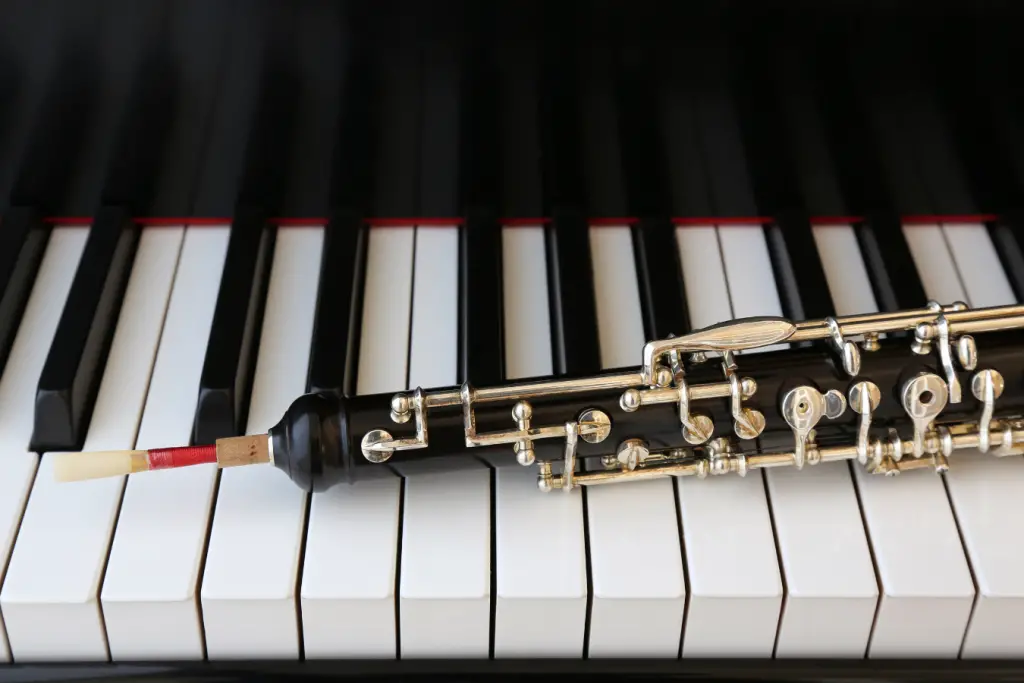
Learning to play the oboe can be an exciting journey for aspiring musicians. As beginners progress in their skills, many are eager to tackle familiar tunes on this beautiful double-reed instrument. The oboe’s distinctive timbre makes it well-suited for a variety of musical styles, from classical pieces to contemporary hits.
The First 50 Songs You Should Play on Oboe offers a diverse collection of melodies perfect for new players, including pop hits, movie themes, classical selections, and folk songs. This carefully curated repertoire provides an excellent starting point for oboists looking to expand their musical horizons and apply their developing techniques to recognizable tunes.
Exploring a mix of genres allows oboe students to discover their preferred styles while building a solid foundation in musicianship. By practicing these accessible pieces, players can improve their breath control, finger dexterity, and overall confidence with the instrument. The journey of mastering these initial songs sets the stage for tackling more complex compositions in the future.
Choosing Your First Oboe Pieces
Selecting appropriate pieces is crucial for beginners to develop their skills and maintain motivation. The right choices balance challenge and enjoyment, allowing new players to make steady progress.
Criteria for Selection
When choosing initial oboe pieces, consider the player’s skill level and goals. Look for songs with simple rhythms and a limited range of notes. Aim for pieces that use primarily the middle register of the oboe, as this is typically easier for beginners to produce clear tones.
Seek out melodies with moderate tempos, allowing time to focus on proper fingering and breath control. The First 50 Songs You Should Play on Oboe offers a diverse collection suitable for beginners.
Simple Melodies to Start
Begin with well-known tunes that are easy to recognize and play. Popular choices include “Ode to Joy” from Beethoven’s 9th Symphony and “Twinkle, Twinkle Little Star.” These familiar melodies help new players focus on technique rather than learning unfamiliar notes.
Short classical pieces like Bach’s “Minuet in G” or Mozart’s “Eine Kleine Nachtmusik” provide excellent starting points. These compositions often feature straightforward rhythms and stepwise melodies, ideal for developing finger dexterity and embouchure control.
Folk Songs and Tuneful Exercises
Folk songs offer an excellent blend of simplicity and musicality for beginner oboists. Pieces like “Greensleeves” or “Amazing Grace” typically have uncomplicated rhythms and beautiful, flowing melodies. These songs help players develop their sense of phrasing and expression.
Many oboe method books include tuneful exercises designed to improve specific skills. These might focus on aspects like articulation, dynamics, or intervals. Incorporating these exercises alongside recognizable tunes can make practice sessions more engaging and productive.
Fundamentals of Oboe Playing
Mastering the oboe requires developing essential skills in breath control, finger technique, and understanding the instrument’s unique components. These foundational elements form the basis for producing a beautiful tone and playing with precision.
Breath Control and Support
Proper breath control is crucial for oboe players. Inhale deeply, expanding the lower abdomen and maintaining an open throat. This technique allows for a steady airstream, essential for consistent tone production.
Develop diaphragmatic breathing by practicing long tones. Start with middle G and hold it for as long as possible while maintaining a stable pitch and volume. Gradually increase the duration over time.
Use a metronome to practice breath control exercises. Set it to 60 bpm and play quarter notes, focusing on maintaining even air pressure throughout each note. Progress to longer note values as your control improves.
Finger Technique Basics
Correct hand position is vital for efficient finger movement. Keep fingers curved and relaxed, with fingertips covering the holes completely. Practice scales slowly, ensuring each finger moves independently and precisely.
Start with simple three-note songs using B, A, and G in the middle register. These notes allow for comfortable hand positioning while developing finger coordination.
Incorporate daily finger exercises to improve dexterity. Practice chromatic scales, focusing on smooth transitions between notes. Use a mirror to observe your hand position and finger movements.
Understanding Reeds and Embouchure
The reed is a critical component of oboe playing. Learn to adjust and maintain your reeds to ensure optimal performance. Soak the reed in water for 1-2 minutes before playing to prevent cracking.
Form the embouchure by creating a small opening with your lips, covering about 1/3 of the reed. Avoid biting or applying excessive pressure. Practice producing a clear, steady tone without squeaks or fluctuations.
Experiment with different reed strengths to find the best fit for your playing style and skill level. Softer reeds are often recommended for beginners, while more experienced players may prefer medium or hard reeds for greater control and projection.
Reading Music for Oboe
Reading music is a fundamental skill for oboe players. It involves understanding musical notation, interpreting rhythms, and recognizing key signatures. Mastering these elements allows oboists to accurately perform written compositions and sight-read new pieces.
Navigating Sheet Music
Oboe sheet music typically uses the treble clef. The five lines and four spaces represent different pitches, with each line and space corresponding to a specific note. The oboe’s range extends from B-flat3 to G6, covering about two and a half octaves.
Ledger lines above and below the staff indicate notes outside this range. Oboists should familiarize themselves with these higher and lower notes, as they frequently appear in more advanced pieces.
Music symbols such as accidentals (sharps, flats, and naturals) modify pitches. Dynamic markings (p, mf, f) indicate volume levels, while articulation marks (staccato dots, slurs) guide playing style.
Rhythmic Patterns and Time Signatures
Time signatures appear at the beginning of a piece, indicating the number of beats per measure and the note value that represents one beat. Common time signatures for oboe music include 4/4, 3/4, and 6/8.
Rhythmic patterns consist of various note durations:
- Whole notes (4 beats)
- Half notes (2 beats)
- Quarter notes (1 beat)
- Eighth notes (1/2 beat)
- Sixteenth notes (1/4 beat)
Rests, indicating periods of silence, correspond to these note values. Dotted notes extend duration by half, while ties connect notes across bar lines.
Oboists should practice counting and subdividing beats to accurately interpret rhythms. Metronome use can help develop a strong sense of timing and tempo.
Key Signatures and Scales
Key signatures, shown at the beginning of each staff, indicate the tonality of a piece. They specify which notes are consistently sharp or flat throughout the composition. Major and minor scales form the basis of these key signatures.
Common keys for oboe music include:
- C major / A minor (no sharps or flats)
- G major / E minor (1 sharp)
- F major / D minor (1 flat)
- D major / B minor (2 sharps)
Oboists should practice scales in various keys to improve finger dexterity and intonation. This familiarity aids in sight-reading and understanding the structure of musical pieces.
Accidentals may appear within the music, temporarily altering notes outside the key signature. These modifications only apply within the measure they appear unless tied to the next measure.
Progression to Intermediate Pieces
As oboe skills advance, players can tackle more challenging repertoire. This progression involves refining articulation, expanding dynamics, and mastering a wider range of techniques and pitches.
Developing Articulation and Dynamics
Intermediate oboe pieces require greater control over articulation and dynamics. Students can practice Cesar Franck’s Piece V, which features frequent tempo and dynamic changes. This piece helps develop musicality and expressive playing.
Oboists should focus on:
- Staccato and legato articulations
- Crescendos and diminuendos
- Varied note lengths and accents
Exercises targeting these skills will prepare players for more complex musical phrases. Short etudes can be beneficial for honing specific techniques in isolation.
Extending Range and Technique
Intermediate oboists should work on expanding their range and refining their technique. The Swan by Camille Saint-Saëns, originally written for cello, is an excellent piece for developing upper register control and smooth legato playing.
Key areas to focus on include:
- Extended range exercises
- Complex fingerings and trills
- Breath control for longer phrases
Players can also explore pieces with more challenging rhythms and key signatures. Practicing scales and arpeggios in various keys will build a strong foundation for tackling diverse repertoire.
Incorporating Musical Expression
Musical expression elevates oboe playing from mere note production to artful performance. It involves shaping phrases, adding dynamic contrast, and developing a personal sound. Mastering these elements allows beginners to infuse emotion and character into their music.
Phrasing and Musicality
Phrasing refers to the way musical sentences are shaped and interpreted. Beginners should focus on playing through entire musical phrases without interruption. This creates a more fluid and natural sound.
Dynamic contrast is crucial for expressive playing. Students can practice crescendos (getting louder) and diminuendos (getting softer) to add interest to their music. Start with simple dynamic changes between forte (loud) and piano (soft).
Articulation also plays a key role in musicality. Experiment with different tongue placements to create various articulations:
- Legato: smooth and connected
- Staccato: short and detached
- Tenuto: held for full value
Listen to professional recordings to understand how experienced oboists shape phrases and use dynamics. Try to emulate these techniques in your own playing.
Introducing Vibrato
Vibrato is a slight fluctuation in pitch that adds warmth and expression to sustained notes. It’s an advanced technique that beginners should approach carefully.
Start by practicing a slow, relaxed vibrato on long notes. Use your diaphragm to create a gentle pulsing of air. Aim for 4-5 pulses per second initially.
Gradually increase the speed of the pulses as you become more comfortable. Remember that vibrato should enhance the music, not overpower it.
First 50 Songs You Should Play on Oboe offers pieces that allow for expressive playing. Use these to practice incorporating vibrato into your performances.
Experiment with different vibrato speeds and intensities to match the mood of the music. Slow, wide vibrato can convey sadness, while faster, narrower vibrato might express excitement.
Repertoire Expansion
As oboe skills develop, exploring diverse musical styles and periods enhances technique and musicality. Expanding repertoire introduces new challenges and expressive opportunities.
Baroque and Classical Eras
Baroque and Classical compositions form the foundation of oboe repertoire. Corelli’s Concerto for Oboe and Strings serves as an excellent introduction to Baroque concertos. Its melodic lines and ornamentation provide valuable practice in period-specific techniques.
Mozart’s Oboe Concerto in C major is a cornerstone of Classical oboe literature. This piece showcases the instrument’s lyrical qualities and demands precise articulation and breath control.
Bach’s aria “Ich habe genug” from Cantata BWV 82 offers a chance to explore the oboe’s role in sacred music. Its expressive melodies help develop tone and phrasing skills.
Romantic and Contemporary Works
Romantic era compositions expand the oboe’s emotional range. Schumann’s Three Romances for Oboe and Piano present lyrical melodies and showcase the instrument’s expressive capabilities.
For contemporary repertoire, Britten’s Six Metamorphoses after Ovid stands out as a challenging unaccompanied work. It tests technique and musicality through varied movements inspired by mythological characters.
Poulenc’s Sonata for Oboe and Piano exemplifies 20th-century French style. Its mix of playful and melancholic moods provides an excellent introduction to modern oboe literature.
Ensemble Playing and Duets
Ensemble playing develops crucial musical skills. Mozart’s Oboe Quartet in F major offers a chance to blend with strings while maintaining a prominent role.
Telemann’s Sonata in A minor for Two Oboes provides valuable experience in duet playing. It helps refine intonation and teaches the art of musical conversation.
For a modern ensemble piece, Malcolm Arnold’s Divertimento for Flute, Oboe, and Clarinet showcases the oboe’s versatility in a small woodwind group. It introduces players to contemporary harmonies and rhythms.
Practice Strategies
Developing effective practice habits and overcoming challenges are crucial for mastering the oboe. Consistent, focused practice and problem-solving techniques will help beginners progress quickly.
Effective Practice Routines
Set aside dedicated practice time each day, aiming for at least 30 minutes. Begin with warm-up exercises to prepare your embouchure and fingers. Focus on proper breathing techniques and posture.
Practice scales and arpeggios to improve finger dexterity and intonation. Start with simple scales like C major and gradually increase complexity.
Work on beginner oboe solos to apply your skills in a musical context. Choose pieces that challenge you but are still within reach.
Use a metronome to develop rhythm and timing. Start slowly and gradually increase the tempo as you become more comfortable.
Record yourself playing and listen back critically. This helps identify areas for improvement and track progress over time.
Overcoming Common Challenges
Reeds can be a significant challenge for beginners. Learn proper reed care and maintenance. Consider having multiple reeds available to rotate and extend their lifespan.
Embouchure fatigue is common. Build endurance gradually by practicing in shorter sessions and taking breaks when needed.
Intonation issues can be addressed by practicing long tones and using a tuner. Pay close attention to pitch and make small adjustments as necessary.
Finger coordination can be improved through slow, deliberate practice of difficult passages. Gradually increase speed as accuracy improves.
Breath control is crucial for oboe playing. Practice deep breathing exercises and work on sustaining long notes to develop lung capacity and control.
Performance Preparation
Mastering performance techniques is crucial for oboe players. Proper preparation enhances confidence and ensures a successful musical presentation.
Stage Presence and Performance Anxiety
Developing a strong stage presence begins with good posture. Stand or sit up straight, keeping shoulders relaxed and feet firmly planted.
Practice deep breathing exercises to calm nerves before performances. Inhale slowly for 4 counts, hold for 4, then exhale for 8 counts.
Visualize a successful performance in detail. Imagine playing each note perfectly and receiving applause from the audience.
Familiarize yourself with the performance space beforehand if possible. This reduces uncertainty and increases comfort on stage.
Beginner oboe solos can help build confidence for performances. Start with simpler pieces and gradually progress to more complex ones.
Recital and Audition Tips
Prepare a diverse repertoire for recitals and auditions. Include pieces from different periods and styles to showcase versatility.
Practice sight-reading regularly to improve this crucial skill for auditions. Set aside time each day to read through new music.
Record practice sessions and listen critically. This helps identify areas for improvement and builds confidence in one’s abilities.
Dress appropriately for the occasion. Choose comfortable, professional attire that allows for ease of movement while playing.
Arrive early to warm up and acclimate to the performance space. This provides time to adjust to the room’s acoustics and temperature.
First 50 Songs You Should Play on the Oboe offers a range of pieces suitable for recitals and auditions at various skill levels.
Continued Learning and Improvement
Advancing your oboe skills requires dedication and structured practice. Seeking guidance from experienced players and setting clear goals will help you progress steadily and stay motivated.
Seeking Feedback and Instruction
Regular lessons with a qualified oboe instructor are invaluable for developing proper technique and musicianship. An experienced teacher can identify areas for improvement and provide personalized exercises to address specific challenges.
Consider joining a local youth orchestra or chamber music group. Playing with others enhances your ability to blend and balance your sound within an ensemble.
Attend masterclasses and workshops when possible. These events offer opportunities to learn from renowned oboists and gain new perspectives on playing.
Record your practice sessions and performances. Listening back allows you to critically assess your playing and track progress over time.
Setting Achievable Goals
Break down long-term objectives into smaller, manageable tasks. For example, aim to learn one new scale or etude each week.
Create a practice schedule that outlines specific goals for each session. This might include:
- 15 minutes of long tones
- 20 minutes of scales and arpeggios
- 30 minutes working on repertoire
Set realistic timelines for learning new pieces. Allow extra time for challenging sections and technical passages.
Track your progress in a practice journal. Note areas of improvement and identify recurring challenges to focus on in future sessions.
Regularly reassess and adjust your goals as you advance. Celebrate achievements, no matter how small, to stay motivated and engaged in your musical journey.