
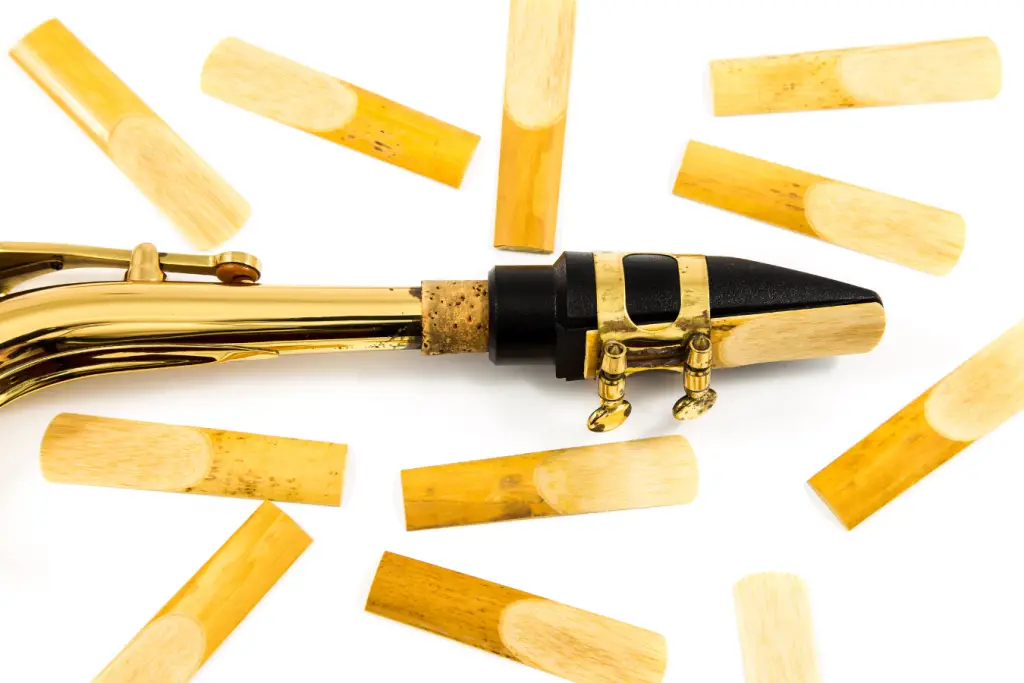
Saxophone reeds are a crucial component of the instrument, responsible for producing its distinctive sound. These thin strips of material vibrate when air passes through them, creating the saxophone’s rich tones. Most saxophone reeds are made from Arundo donax, commonly known as “Giant cane,” a type of grass that grows in Mediterranean regions.
While traditional reeds are crafted from natural cane, synthetic alternatives have gained popularity in recent years. Synthetic reeds are typically made from polypropylene or similar non-toxic plastics, offering durability and consistency that natural reeds sometimes lack. Some players prefer these modern options for their reliability and longevity.
The process of making natural cane reeds involves carefully cutting and shaping the material to achieve the desired thickness and flexibility. Each reed is unique due to variations in the natural cane, which contributes to the individual character of a saxophonist’s sound. This variability also means that musicians often need to try multiple reeds to find the perfect match for their playing style and instrument.
Historical Development of Saxophone Reeds
Saxophone reeds have undergone significant changes since the instrument’s invention in the 1840s. The materials and manufacturing processes have evolved to enhance performance and consistency.
Origins and Materials
The earliest saxophone reeds were made from cane, specifically Arundo donax, a plant native to Mediterranean regions. This cane was chosen for its unique properties, including flexibility and resonance. Early reed makers harvested the cane, cut it to size, and shaped it by hand.
The process was labor-intensive and resulted in inconsistent quality. Players often had to sort through many reeds to find ones that performed well. Despite these challenges, cane remained the primary material for saxophone reeds due to its natural acoustic properties.
Evolution Over Time
As saxophone playing techniques advanced, so did reed manufacturing. In the early 20th century, machine-made reeds became available, offering more consistent quality. Manufacturers developed precise cutting and shaping methods to produce reeds with uniform thickness and strength.
The mid-20th century saw experiments with synthetic materials. Plastic reeds emerged as an alternative, offering durability and consistency. While some players adopted them, many still preferred traditional cane reeds for their tonal qualities.
Recent developments include hybrid reeds combining natural cane with synthetic materials. These aim to blend the best qualities of both materials, providing consistency and durability while maintaining a natural sound.
Materials Used in Modern Saxophone Reeds
Saxophone reeds are crafted from various materials, each offering unique tonal qualities and playing characteristics. These materials range from traditional natural cane to modern synthetic compounds and hybrid options.
Cane Reeds
Cane reeds are the traditional choice for saxophone players. Made from Arundo donax, a giant grass species, these reeds are prized for their warm, rich tone. The cane is harvested, dried, and carefully cut to precise specifications.
France has long been the primary source of reed cane, but Argentina and Spain are now gaining popularity as well. The Mediterranean climate in these regions provides ideal growing conditions for the cane.
Cane reeds offer a complex tonal palette and responsive feel. However, they are sensitive to environmental changes and can be inconsistent from reed to reed. Players often need to try multiple reeds to find ones that perform well.
Synthetic Reeds
Synthetic reeds are made from various polymer compounds designed to mimic the properties of cane. These reeds offer several advantages over their natural counterparts:
- Consistency: Each synthetic reed performs similarly
- Durability: They last longer than cane reeds
- Stability: Less affected by temperature and humidity
Synthetic reeds produce a bright, clear tone that some players prefer for certain musical styles. They’re particularly popular among students and performers who value reliability and low maintenance.
Hybrid Reeds
Hybrid reeds combine natural and synthetic materials to balance the benefits of both. These reeds typically feature a cane body with a synthetic coating or tip. The goal is to preserve the tonal qualities of cane while improving durability and consistency.
Hybrid reeds offer:
- Enhanced stability compared to pure cane reeds
- Longer lifespan than traditional reeds
- A tone closer to natural cane than fully synthetic options
These reeds are gaining popularity among players seeking a compromise between the warmth of cane and the reliability of synthetics. They’re particularly useful in situations where environmental conditions fluctuate.
Manufacturing Process
Saxophone reed production involves several precise steps to transform raw cane into high-quality musical components. The process requires careful attention to detail and quality control at each stage.
Harvesting and Selection
The journey of a saxophone reed begins in cane fields, typically in Mediterranean regions. Arundo donax, a tall grass species, is harvested after 2-3 years of growth. Skilled workers cut the cane stems by hand, ensuring optimal maturity.
After harvest, the cane undergoes rigorous selection. Only the finest sections are chosen based on factors like diameter, wall thickness, and fiber density. These qualities significantly impact the reed’s eventual sound and responsiveness.
Selected cane sections are then cut into shorter segments and left to dry naturally for several months. This crucial step stabilizes the material’s moisture content and physical properties.
Shaping and Cutting
Once dried, the cane enters the manufacturing facility for shaping. Specialized machines split the cane tubes lengthwise into smaller pieces. These pieces are sorted by size, with larger splits destined for tenor and baritone saxophone reeds, and smaller ones for alto and soprano.
The cane splits then undergo digital blanking, where machines make precise cuts to create the basic reed shape. This process determines the reed’s thickness profile, a critical factor in its playing characteristics.
Next, sophisticated cutting machines carve the reed’s distinctive tapered shape. The vamp, or playing surface, receives particular attention to ensure proper flexibility and response.
Finishing and Quality Control
In the final stages, each reed undergoes meticulous finishing. Skilled technicians use specialized tools to finely adjust the reed’s dimensions and contours. This hand-finishing process is crucial for achieving optimal playability.
Quality control is rigorous throughout production. Reeds are inspected visually and tested for consistency in thickness, weight, and flexibility. Many manufacturers employ electronic scanning and testing equipment to ensure precision.
Some high-end reed makers use digital imaging technology to analyze each reed’s structure and sort them into matching strength categories. This enhances consistency across batches.
Finally, approved reeds are packaged and prepared for distribution to saxophone players worldwide, ready to produce beautiful music.
Factors Influencing Reed Choice
Selecting the right saxophone reed involves considering several key elements. These factors work together to affect the player’s sound, comfort, and overall performance.
Strength and Flexibility
Reed strength greatly impacts playability and tone production. Lighter reeds (2 or 2.5) are easier to play and produce brighter tones. They require less air support, making them suitable for beginners or players with less developed embouchures.
Stronger reeds (3 or 3.5) demand more air support but offer richer, darker sounds. They provide better control at higher volumes and in the altissimo register.
Flexibility relates to the reed’s ability to vibrate. More flexible reeds respond quickly but may lack stability in higher registers. Stiffer reeds offer more stability but can be challenging to play softly.
Tonal Quality and Responsiveness
The reed’s cut and material significantly influence tonal quality. Traditional cane reeds produce warm, rich tones favored by many saxophonists. Synthetic reeds offer consistency and durability but may lack the tonal complexity of cane.
The reed’s shape affects responsiveness. French-cut reeds have a thinner tip, providing quick response and brighter sound. American-cut reeds have a thicker tip, offering more resistance and a darker tone.
Reed thickness also impacts tone. Thicker reeds produce fuller, darker sounds but require more air support. Thinner reeds are more responsive but may sound brighter or thinner.
Player’s Preference and Playing Style
Personal preference plays a crucial role in reed selection. Some players prefer brighter sounds, while others seek darker tones. Experimentation is key to finding the ideal reed.
Playing style influences reed choice. Jazz musicians often opt for softer reeds for flexibility in improvisation. Classical players may prefer harder reeds for better projection and control.
The player’s embouchure strength and air support capabilities also factor into reed selection. Stronger players can handle stiffer reeds, while those with less developed embouchures may benefit from softer reeds.
Climate and altitude can affect reed performance, necessitating adjustments in reed strength or type based on playing conditions.