
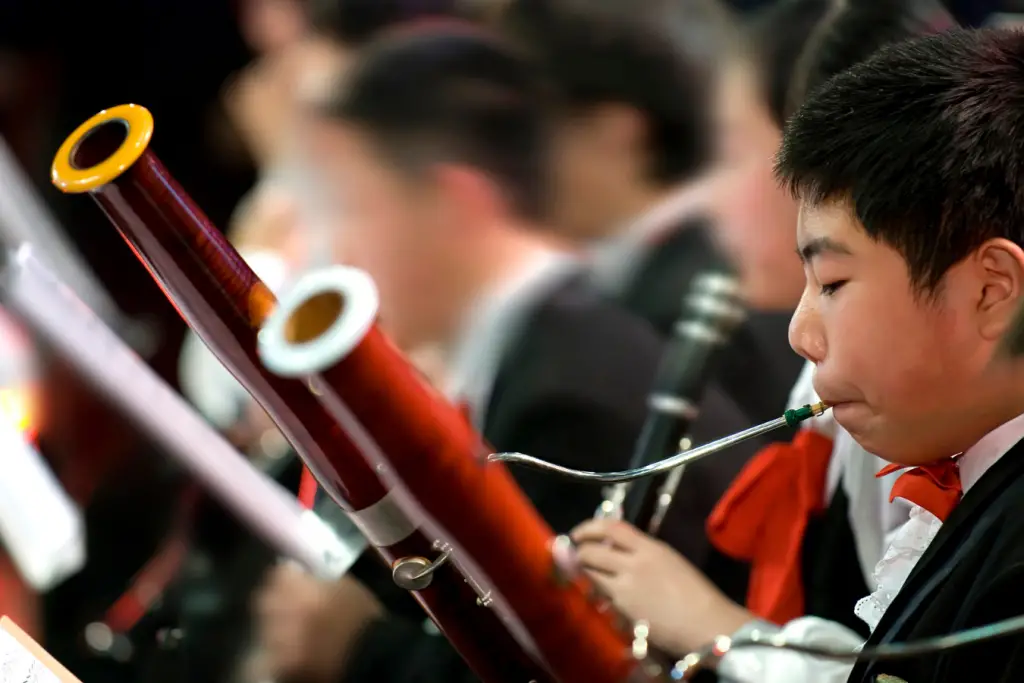
Speed and agility on the bassoon are crucial for performing intricate musical passages, whether in orchestral excerpts, solos, or chamber music. However, playing fast is not just about moving your fingers quickly—it requires a combination of technical control, finger efficiency, breath support, and mental preparation.
This guide will explore:
✔ Why speed is challenging on the bassoon
✔ Techniques for improving finger agility
✔ Breath control and articulation for fast passages
✔ Effective practice strategies
✔ Common mistakes and how to fix them
1. Why Is Speed Challenging on the Bassoon?
Playing fast passages on the bassoon is particularly difficult due to:
✔ Large keywork and long finger movements – The bassoon’s keys are larger than those on many other woodwinds, requiring precise but efficient movements.
✔ Complex fingerings – Many notes have alternate fingerings, which must be carefully chosen to optimize smooth transitions.
✔ Breath and articulation challenges – Fast playing demands quick, clean articulation without sacrificing tone quality.
✔ Coordination between fingers, tongue, and breath – Speed requires synchronization of multiple elements, which can be difficult to master.
Understanding these challenges allows you to approach speed training strategically.
2. Improving Finger Agility for Speed
Fast playing starts with efficient finger technique. Here’s how to improve it:
A. Relax Your Hands and Fingers
✔ Avoid excessive finger tension, which slows movement.
✔ Keep fingers close to the keys to minimize unnecessary motion.
✔ Practice playing on a table to observe finger movements—fingers should lift and drop smoothly.
B. Use Proper Finger Positioning
✔ Maintain a light but firm touch—pressing too hard slows reaction time.
✔ Position fingers directly over the keys rather than reaching.
✔ Keep the thumbs relaxed to avoid unnecessary strain.
C. Slow Practice with Precision
1️⃣ Play the passage slowly and ensure every note is clear.
2️⃣ Increase the tempo gradually while maintaining accuracy.
3️⃣ Use a metronome to track progress (start at 50% speed, then build up).
D. Use Alternate Fingerings for Faster Transitions
Some fingerings allow for smoother and quicker movement between notes. Learn alternate fingerings to reduce unnecessary shifts, especially in technical passages.
✔ Example: In fast chromatic runs, some forked fingerings may be slower than using keys optimized for speed.
E. Strengthen Finger Coordination
✔ Practice scales and arpeggios daily at increasing speeds.
✔ Use rhythmic variations (e.g., long-short-long-short) to improve flexibility.
✔ Play slurred passages first, then add articulation once comfortable.
3. Breath Control and Articulation in Fast Passages
A. Maintaining Steady Airflow
Fast passages require consistent, controlled airflow to maintain a steady tone:
✔ Support the sound with engaged diaphragm breathing.
✔ Keep air flowing smoothly—don’t cut off phrases abruptly.
✔ Avoid over-blowing, which can distort tone and pitch at high speeds.
B. Mastering Articulation for Speed
✔ Use light tonguing – Tongue should briefly touch the reed without stopping airflow.
✔ Try different articulation techniques – Double tonguing may help in very fast passages.
✔ Practice on one note first – Get articulation fast and clean before applying it to full phrases.
C. Coordination Between Tongue and Fingers
✔ Slow down and synchronize both elements before speeding up.
✔ Say “ta-ka” or “du-gu” without the instrument to train articulation reflexes.
✔ Avoid tonguing harder than necessary, which can slow you down.
4. Effective Practice Strategies for Playing Faster
A. Slow Practice with a Metronome
✔ Start at a comfortable speed with a metronome.
✔ Increase the tempo by small increments once accurate.
✔ Record yourself to check for evenness and consistency.
B. Use the “Chunking” Method
Instead of playing an entire fast passage at once, break it into small segments:
1️⃣ Play two to four notes perfectly.
2️⃣ Add the next few notes, maintaining speed and accuracy.
3️⃣ Connect the sections until the whole passage is smooth.
✔ This technique helps train muscle memory efficiently.
C. Use Rhythmic Variations
Practicing with rhythmic changes makes your fingers more flexible:
✔ Play the passage with dotted rhythms (long-short-long-short).
✔ Reverse the rhythm (short-long-short-long).
✔ This forces your fingers to adapt and strengthen coordination.
D. Alternate Between Slurred and Tongued Passages
✔ Practice slurring fast notes first to ensure smooth finger transitions.
✔ Once clean, add light articulation without disrupting speed.
E. Play with Different Dynamics
✔ Practicing softly (piano) improves control.
✔ Practicing loudly (forte) builds finger strength.
✔ Varying dynamics helps prevent tension buildup.
5. Common Mistakes and How to Fix Them
A. Rushing the Tempo
✔ Problem: Playing too fast too soon leads to sloppiness.
✔ Solution: Slow down and build speed gradually—accuracy is more important than rushing.
B. Finger Tension Slowing Movement
✔ Problem: Fingers feel stiff and uncoordinated.
✔ Solution: Relax your hands and keep fingers close to the keys.
C. Inconsistent Articulation
✔ Problem: Notes sound uneven or unclear.
✔ Solution: Isolate articulation exercises and coordinate tongue with fingers.
D. Running Out of Air in Fast Passages
✔ Problem: Losing breath control in long, fast phrases.
✔ Solution: Take strategic breaths and ensure steady airflow throughout.
6. Incorporating Speed into Musical Performance
Once you have developed speed, apply it musically:
✔ Phrase shaping – Fast doesn’t mean robotic; maintain musical expression.
✔ Dynamic variation – Add contrast to emphasize important notes.
✔ Use rubato when appropriate – Slight flexibility in tempo can make fast passages more expressive.
A. Listening to Professional Bassoonists
Study great bassoonists to hear how they execute fast passages:
🎵 Sergio Azzolini – Brilliant technical precision.
🎵 Dag Jensen – Smooth, effortless speed in lyrical and fast playing.
🎵 Judith LeClair – Excellent articulation in rapid orchestral excerpts.
✔ Listen carefully and analyze their fingerings, breath support, and articulation techniques.
Conclusion: Speed Comes from Control, Not Just Quick Fingers
Mastering fast passages on the bassoon requires more than just fast fingers—it demands coordination, efficiency, and patience.
🎯 Key Takeaways:
✔ Relax fingers and keep movements efficient.
✔ Practice slowly and precisely before increasing speed.
✔ Use alternate fingerings to smooth out difficult passages.
✔ Maintain steady air support and avoid over-tonguing.
✔ Break passages into small chunks and practice with rhythmic variations.
✔ Focus on musical expression, not just speed.
With dedicated practice and smart techniques, you’ll develop the agility needed to play fast passages with confidence and control. Keep practicing, and happy bassooning!