
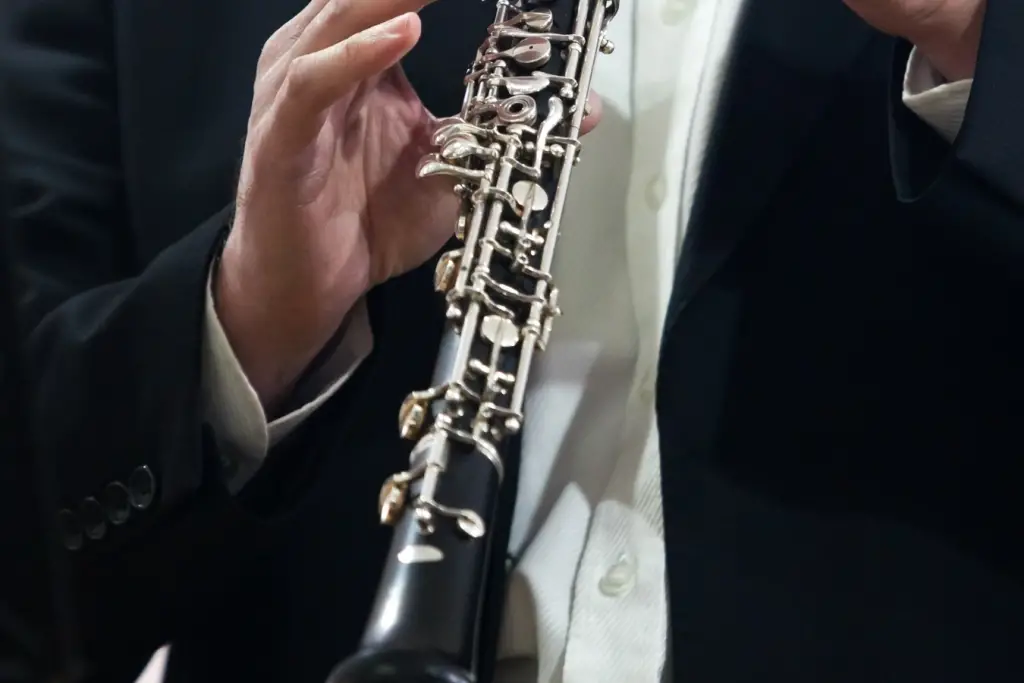
Playing the oboe in a marching band presents unique challenges due to the instrument’s delicate nature and specific playing requirements. Oboe players typically do not march with their instruments in traditional marching band formations. The risk of damage to the oboe and its reeds, combined with the difficulty of maintaining proper embouchure while moving, makes it impractical for field performances.
Instead, oboe players often take on alternative roles during marching band season. Many choose to play a different instrument that’s better suited for marching, such as the clarinet or saxophone. Others may opt to join the color guard or percussion section. This allows oboe players to participate fully in the marching band experience while preserving their primary instrument for concert settings.
For those determined to incorporate the oboe into marching performances, some bands have experimented with stationary positions on the sidelines or specialized arrangements that minimize movement. These adaptations enable oboe players to contribute their unique sound to the ensemble while avoiding the risks associated with marching. Creative directors may find ways to showcase the oboe’s distinctive timbre in field shows, adding depth and variety to the overall musical presentation.
Understanding the Role of the Oboe in Marching Bands
The oboe typically does not play a significant role in marching bands. Its delicate construction and sensitive reeds make it unsuitable for outdoor performances while marching.
Marching bands prioritize instruments that project well outdoors and can withstand movement. The oboe’s softer tone often gets lost in large outdoor spaces.
Some argue that the oboe was originally designed for outdoor use, similar to bagpipes. However, modern marching bands rarely include oboes due to practical concerns.
Oboe players in school bands often switch to other instruments during marching season. Popular alternatives include:
- Clarinet
- Saxophone
- Piccolo
- Percussion instruments
Some oboists may join the color guard or take on non-playing roles during marching performances.
In rare cases, oboists might march with their instrument using special precautions. This requires careful consideration of weather conditions and instrument protection.
The oboe’s absence from marching bands doesn’t diminish its importance in concert settings. Its unique timbre remains valued in orchestras and wind ensembles.
Fundamentals of Marching Band Techniques
Mastering key marching band techniques is essential for creating a polished performance on the field. These skills form the foundation of precision, synchronization, and musical excellence in marching ensembles.
Marching Posture and Movement
Proper posture is crucial for marching band members. Musicians should stand tall with shoulders back, chest up, and chin parallel to the ground. Feet should be shoulder-width apart, with weight evenly distributed.
The measured step is a fundamental marching technique. Band members lift their knees high, point their toes, and roll through the foot from heel to toe. This creates a smooth, uniform appearance across the ensemble.
Turns require precision. Musicians pivot on the ball of the foot, keeping upper bodies facing forward. Practice is key to maintaining instrument position and sound quality during direction changes.
Synchronizing With the Band
Synchronization is vital for a cohesive marching band performance. Musicians must master the art of staying in step with fellow band members while playing their instruments.
Visual cues are essential. Players should use peripheral vision to align with others in their row and column. Drum majors provide important timing signals that the band must follow closely.
Listening skills are equally important. Band members must attune their ears to the ensemble’s overall sound, adjusting their volume and timing accordingly. This creates a balanced and unified musical performance.
Breathing Techniques for Marching Musicians
Proper breathing is crucial for marching musicians to maintain sound quality and endurance. Diaphragmatic breathing, which involves expanding the abdomen rather than the chest, provides better support and control.
Players should practice taking deep, quick breaths between phrases. This helps maintain a consistent air supply while moving. Breathing exercises can improve lung capacity and control.
It’s important to coordinate breathing with marching steps. Musicians often time their breaths with specific foot placements to ensure consistent air support throughout performances.
Oboe-Specific Challenges in a Marching Environment
Playing the oboe in a marching band presents unique obstacles that require careful consideration and adaptation. These challenges primarily stem from the instrument’s delicate nature and the physical demands of marching.
Projecting Sound on the Marching Field
The oboe’s naturally soft tone can be difficult to project in outdoor settings. Wind and ambient noise often overpower its sound, making it challenging to be heard alongside louder instruments.
To combat this, oboists may need to use stronger reeds and adjust their playing technique. Focusing on breath support and embouchure control becomes crucial for maintaining volume and clarity.
Some band directors might request oboists to play in a higher register to increase audibility. This technique can help the oboe’s sound cut through other instruments more effectively.
Protecting the Instrument in Outdoor Conditions
Oboes are sensitive to temperature and humidity changes, making outdoor performances risky. Sudden shifts in weather can cause wood to crack or keys to misalign.
To mitigate these risks, oboists should:
- Use synthetic reeds, which are less affected by moisture
- Employ a protective case during transport and when not playing
- Wipe down the instrument frequently to remove condensation
- Consider using a plastic or composite oboe for marching season
Regular maintenance becomes even more critical when exposing the oboe to outdoor conditions. Players should schedule more frequent check-ups with instrument technicians.
Adapting Fingering and Embouchure for Motion
Marching while playing requires oboists to maintain proper form and technique despite constant movement. This can affect fingering accuracy and embouchure stability.
Players must develop strategies to:
- Stabilize the instrument against body movement
- Maintain consistent air support while marching
- Adjust fingering techniques to accommodate uneven terrain
Practice routines should incorporate marching drills to build muscle memory for simultaneous playing and movement. Some oboists find that using a neck strap can help distribute the instrument’s weight and improve stability while marching.
Embouchure exercises focused on maintaining seal and control during motion are essential. Players may need to experiment with different reed strengths to find the best balance between ease of play and sound projection in a marching context.
Musical Arrangements and Adaptations for Oboe
Playing the oboe in a marching band requires careful consideration of repertoire, part adaptation, and amplification techniques. These elements are crucial for successfully integrating the oboe into the outdoor ensemble setting.
Selecting Suitable Repertoire
Choosing appropriate music is essential for oboe players in marching bands. Look for pieces with prominent melodic lines that showcase the oboe’s unique timbre. Marches and patriotic tunes often feature oboe parts that can be adapted for outdoor performance.
Consider arrangements that incorporate the oboe in unison with other woodwinds to enhance projection. Popular songs and movie themes can be excellent choices, as they often have recognizable melodies suited to the oboe’s range.
Avoid pieces with extended low register passages or complex technical runs, as these may be difficult to execute while marching. Instead, opt for music that emphasizes the oboe’s middle and upper registers.
Transcription and Part Adaptation
Adapting oboe parts for marching band often involves simplifying complex passages. Remove fast runs or intricate ornamentations that may be challenging to perform while moving.
Transpose parts to more comfortable keys if necessary. This can help with projection and ease of playing. Consider rewriting exposed solo sections as duets with another instrument to provide support.
Shorten long sustained notes, as these can be difficult to maintain while marching. Replace them with shorter articulated notes or rhythmic figures that match the overall band texture.
Add cues from other instruments to help the oboist stay in sync with the ensemble during loud sections. This is particularly important for entries after rests.
Oboe Amplification Strategies
Amplifying the oboe is crucial for outdoor performances. Use a clip-on microphone designed for woodwind instruments to capture the oboe’s sound without restricting movement.
Position the microphone near the top joint of the oboe, angled slightly towards the bell. This placement helps capture both the direct sound and the instrument’s natural resonance.
Experiment with EQ settings to enhance the oboe’s projection without causing feedback. Boost mid-range frequencies to help the oboe cut through the band’s texture.
Consider using a wireless system to eliminate the need for cables, allowing for greater mobility on the field. Ensure the transmitter is securely attached to prevent interference with playing.
Practice with the amplification system to adjust your playing technique. You may need to modify your embouchure or air support to achieve the desired sound when amplified.
Effective Practice Strategies for Marching Oboists
Marching oboists face unique challenges that require specific practice techniques. Mastering individual skills, adapting to group dynamics, and preparing for performances are crucial elements for success.
Individual Practice Techniques
Oboists should focus on developing breath control and embouchure strength to maintain consistent tone while marching. Daily long tone exercises help improve endurance and pitch stability.
Practicing scales and arpeggios in various articulation patterns enhances finger dexterity and intonation. This is especially important when playing in different weather conditions.
Utilizing a metronome during practice sessions helps internalize the tempo and improves timing. Oboists should practice their parts at various speeds, gradually increasing to performance tempo.
Recording oneself and listening back can identify areas for improvement in tone quality and rhythm. This technique is particularly useful for addressing issues that may arise while marching.
Group Rehearsal Dynamics
Oboists must learn to blend their sound with other instruments in the ensemble. Practicing with recordings of the full band helps develop this skill.
Attention to visual alignment is crucial. Oboists should practice marching in formation while playing, using a mirror or video recording to check posture and instrument position.
Coordinating with percussion sections can be beneficial. Some oboists may alternate between oboe and percussion instruments during performances.
Regular sectional rehearsals allow oboists to work on parts specific to their instrument group. This focused practice time is essential for addressing unique challenges faced by double reed players in a marching setting.
Performance Preparation
Mental preparation is key for marching oboists. Visualization techniques can help players anticipate challenges and prepare for various performance scenarios.
Proper instrument care is crucial for outdoor performances. Oboists should practice quick assembly and disassembly of their instruments and carry necessary maintenance tools.
Memorization of music is often required. Oboists should develop strategies such as chunking difficult passages and creating memory anchors to ensure reliable recall during performances.
Weather considerations are important. Practicing in various conditions helps oboists adapt to changes in reed response and intonation caused by temperature and humidity fluctuations.
Collaborating With Band Members and Directors
Playing the oboe in a marching band requires close collaboration with other musicians and directors. Communication is key to ensuring a harmonious performance.
Oboists should work closely with other woodwind players, particularly flutists and clarinetists. These instruments often share similar melodic lines and need to blend well together.
Regular meetings with the band director are essential. Band directors may need guidance on supporting oboe players effectively, especially if they’re not familiar with the instrument’s unique challenges.
Oboists should be prepared to offer input on reed issues, intonation, and tone quality. This expertise can help the entire ensemble achieve a better sound.
It’s important to be flexible and open to feedback. Directors may request adjustments to playing style or volume to balance with other instruments.
Some directors may ask oboists to play softly, but it’s crucial to maintain proper technique and sound production. Open dialogue about appropriate volume levels is beneficial.
Participating in sectional rehearsals allows for focused practice with other woodwind players. This time can be used to address specific challenges unique to the oboe in a marching context.
Collaboration extends to uniform and instrument care. Oboists should work with band leaders to find solutions for protecting the instrument during performances and ensuring proper storage.
Safety Precautions and Injury Prevention
Playing the oboe in a marching band requires special considerations for safety. Marching while playing poses risks of damage to the instrument, reeds, and the player. Musicians should take precautions to protect themselves and their instruments.
Proper posture and technique are crucial. Players must maintain good alignment while marching to prevent strain on the neck, back, and shoulders. Regular stretching and strengthening exercises can help prepare the body for the physical demands.
Protective gear is essential. A sturdy case shields the oboe from impacts. Neck straps or harnesses distribute weight evenly and reduce fatigue. Fingerless gloves can improve grip in wet conditions.
Hydration and rest are key to preventing fatigue-related injuries. Band members should take regular water breaks and pace themselves during long practice sessions.
Weather considerations are important. In hot conditions, players need to stay cool and avoid overexertion. Cold weather requires extra care to keep hands warm and protect the instrument from temperature changes.
Regular instrument maintenance helps prevent accidents. Loose keys or pads can cause unexpected issues during performances. Players should schedule regular check-ups with instrument technicians.
Maintenance and Care for the Oboe on the Field
Proper maintenance of an oboe during marching band performances is crucial for its longevity and optimal performance. Regular cleaning is essential to prevent moisture buildup and potential damage.
After each performance, players should swab the instrument thoroughly to remove any accumulated moisture. This helps prevent water from collecting in the keypads, which can cause air leaks.
Oboists should carry a small cloth to wipe down the exterior of the instrument between uses on the field. This removes fingerprints and dirt that may accumulate during handling.
It’s important to store the oboe properly when not in use. Keep it in its case to protect it from accidental damage and extreme temperatures.
Regularly check all screws and adjustments to ensure they remain tight despite the movement involved in marching. Loose screws can affect the instrument’s playability.
Key care tips:
- Use cork grease on joints to prevent sticking
- Keep spare reeds in a protective case
- Avoid exposing the oboe to direct sunlight for extended periods
- Handle the instrument with clean, dry hands
By following these maintenance practices, oboists can ensure their instruments remain in top condition for marching band performances.
Selecting Appropriate Accessories and Attire
When preparing to play the oboe in a marching band, selecting the right accessories and attire is crucial. While oboes are not typically used in marching bands, some ensembles may incorporate them for specific performances.
For accessories, a sturdy neck strap or harness is essential to support the instrument’s weight during marching. A water-resistant reed case protects delicate reeds from moisture and damage.
Proper attire includes comfortable, breathable clothing that allows for easy movement. Marching shoes with good support and traction are necessary for maintaining balance while playing and marching.
Essential Accessories:
- Neck strap or harness
- Water-resistant reed case
- Cleaning kit (swab, cloths)
- Protective instrument case
Recommended Attire:
- Moisture-wicking uniform or clothing
- Supportive marching shoes
- Gloves (if required by the band)
In colder weather, fingerless gloves can help keep hands warm while allowing for proper finger placement on the instrument. A bandana or sweatband may be useful to prevent sweat from interfering with playing.
It’s important to check with the band director for specific uniform requirements and any additional accessories needed for performances or practice sessions.