
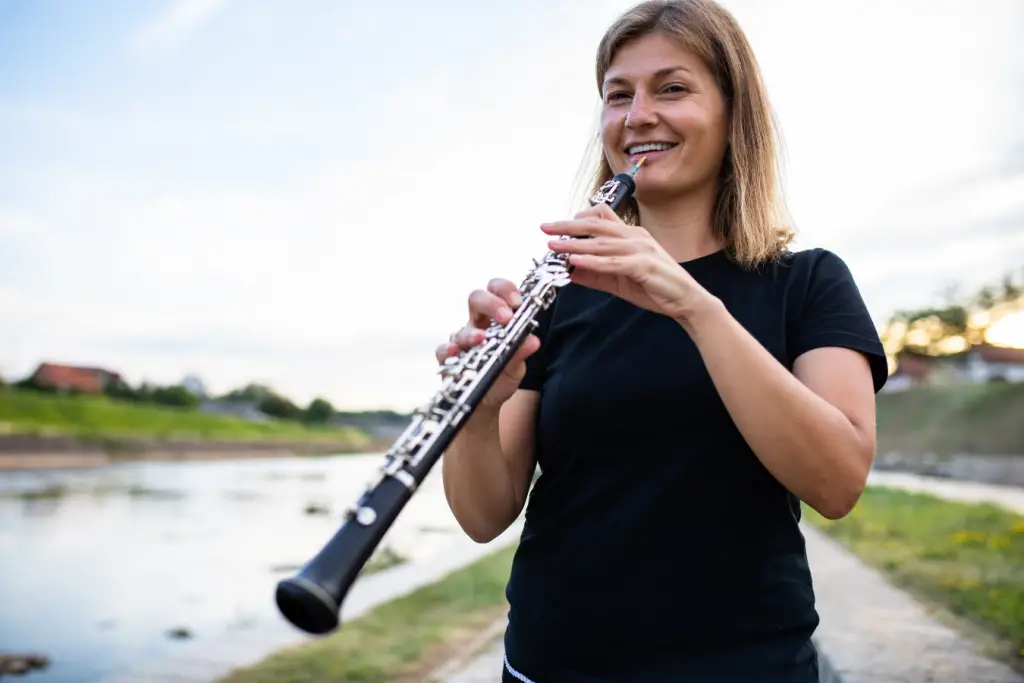
Playing the oboe smoothly requires dedication and practice. This double-reed woodwind instrument is known for its distinctive sound and challenging technique. Mastering smooth play involves proper breath control, embouchure formation, and finger coordination.
To achieve smooth oboe playing, focus on maintaining consistent airflow and developing a relaxed embouchure. Start by practicing long tones to improve breath support and stability. Gradually work on transitions between notes, paying attention to finger placement and movement. Regular scale exercises can help build muscle memory and improve overall fluidity.
Proper reed selection and maintenance also contribute to smoother playing. Choose reeds that respond well to your playing style and adjust them as needed. With patience and consistent practice, oboe players can develop the skills necessary for smooth, expressive performances.
Fundamentals of Oboe Playing
Mastering the oboe requires attention to three key areas: proper posture and breath control, correct embouchure formation and air support, and precise finger technique and hand positioning. These foundational elements form the basis for developing smooth, controlled playing on this challenging double-reed instrument.
Posture and Breath Control
Good posture is essential for oboe playing. Players should sit or stand with a straight back, relaxed shoulders, and feet flat on the floor. The head should be held high, with the chin parallel to the ground.
Proper breath control involves using the diaphragm for deep, full breaths. Oboists should practice breathing exercises to improve lung capacity and control. Inhaling through the mouth and exhaling slowly helps develop steady airflow.
Maintaining consistent air pressure is crucial for producing a steady tone. Players should focus on keeping the airstream constant, even when changing notes or dynamics.
Embouchure and Air Support
The oboe embouchure requires careful formation of the lips around the double reed. Players should create a seal with their lips, leaving just enough space for the reed to vibrate freely.
Oboists must apply gentle pressure with their lips while maintaining flexibility. The corners of the mouth should be firm but not tight. This balance allows for precise control over pitch and tone quality.
Air support is critical for playing the oboe without hand pain. Players should direct a focused stream of air into the reed, adjusting the speed and pressure to control dynamics and intonation. Consistent air support helps maintain a smooth, even tone across all registers.
Finger Technique and Hand Position
Proper hand position is crucial for comfortable and efficient oboe playing. The right thumb supports the instrument’s weight, resting on the thumb rest. The left hand cradles the upper joint, with fingers curved naturally over the keys.
Fingers should remain close to the keys, moving with minimal effort. Practice slow, deliberate finger movements to build muscle memory and accuracy. Gradual increase in speed helps develop clean, precise technique.
Regular scale and arpeggio practice improves finger dexterity and coordination. Players should focus on smooth transitions between notes, avoiding unnecessary tension in the hands and arms. Proper finger technique contributes significantly to achieving a fluid, polished sound on the oboe.
Oboe Maintenance
Proper maintenance is crucial for keeping your oboe in optimal playing condition. Regular care of the reed, cleaning routines, and professional servicing help ensure smooth performance and extend the instrument’s lifespan.
Reed Care
Oboe reeds require special attention as they directly impact sound quality. Soak the reed in clean water for 1-2 minutes before playing. After use, gently wipe it dry and store it in a ventilated reed case.
Avoid touching the reed with your fingers to prevent oil transfer. Use a reed knife to make minor adjustments if needed, but be cautious not to over-scrape.
Replace reeds regularly, typically every 10-20 hours of playing time. Keep multiple reeds in rotation to extend their lifespan and have backups available.
Cleaning the Instrument
Clean your oboe after each use to prevent buildup of moisture and debris. Swab the bore with a soft, lint-free cloth attached to a weight or string.
Use a dedicated tone-hole cleaner to maintain tone holes. This tool has a soft, chenille-like surface wrapped around a wire core.
Wipe the exterior with a soft, dry cloth. For wooden oboes, avoid exposure to extreme temperatures and humidity changes to prevent cracking.
Regular Servicing
Schedule annual professional maintenance to address issues beyond routine care. A technician can check for leaks, adjust keys, and ensure proper alignment.
Prevent cracks in wooden oboes by avoiding sudden temperature changes. If a crack occurs, stop playing immediately and consult a repair specialist.
Oil the keys periodically with key oil to maintain smooth movement. Be cautious not to over-oil, as excess can attract dirt and affect key function.
Tone Production
Producing a smooth, resonant tone on the oboe requires mastering vibrato and dynamic control. These techniques allow players to add expression and depth to their sound while maintaining consistency across the instrument’s range.
Vibrato Techniques
Vibrato on the oboe is typically achieved through diaphragm control. Players pulse their abdominal muscles to create subtle fluctuations in air pressure. Start by practicing slow, exaggerated pulses and gradually increase speed.
A good starting point is 4-5 pulses per second. Focus on maintaining even amplitude and speed in your vibrato. Experiment with different speeds and intensities to suit various musical contexts.
Proper breath support is crucial for effective vibrato. Ensure a steady airstream by engaging your core muscles. This helps prevent the vibrato from becoming choppy or inconsistent.
Dynamic Control
Controlling dynamics on the oboe involves precise management of air pressure and embouchure tension. For soft passages, reduce air pressure while maintaining embouchure support to avoid pitch instability.
To play louder, increase air pressure gradually. Be cautious not to overblow, as this can lead to a harsh or squawky tone. Practice long tones, focusing on smooth transitions between dynamic levels.
Reed selection plays a crucial role in dynamic control. A well-balanced reed responds more easily to changes in air pressure, allowing for greater expressive range.
Experiment with voicing adjustments to enhance dynamic control. Slightly raising or lowering the back of your tongue can help shape the tone at different volumes.
Articulation and Phrasing
Mastering articulation and phrasing is crucial for playing smoothly on the oboe. These techniques involve controlling the tongue and air to shape notes and create musical expressions.
Legato Playing
Legato playing requires seamless connections between notes without interruption in the airflow. To achieve this, oboists must maintain steady breath support while minimizing tongue movement. Articulation on the oboe primarily involves the tongue gently touching the reed to start notes.
For smooth legato passages:
- Keep the air column constant
- Use minimal tongue contact with the reed
- Practice slow scales to develop control
- Focus on finger coordination for clean transitions
Experiment with different syllables like “doo” or “noo” to find the most comfortable articulation. Aim for a consistent sound quality across all registers.
Staccato Technique
Staccato playing involves short, detached notes. The key is to create crisp starts and stops without disrupting the overall musical line. Rapid tonguing techniques can help achieve clean staccato articulation.
Tips for effective staccato:
- Use the tip of the tongue to touch the reed lightly
- Maintain consistent air support between notes
- Practice at slow tempos to develop precision
- Gradually increase speed while maintaining clarity
Advanced players can explore double and triple tonguing for very rapid articulations. These techniques involve alternating syllables to increase tonguing speed.
Musical Interpretation
Musical interpretation on the oboe involves conveying emotions and understanding different musical styles. It requires technical proficiency and artistic sensibility to bring a piece to life.
Expressivity in Performance
Expressivity in oboe performance starts with dynamic control. Players should master subtle changes in air pressure and embouchure to create varying volumes without tension. Vibrato adds depth to long notes, enhancing emotional impact.
Phrasing is crucial for expressivity. Oboists must shape each musical phrase, considering where to breathe and how to connect notes. This creates a sense of musical direction and storytelling.
Articulation affects expressivity significantly. Varying between legato, staccato, and other articulations helps convey different moods and characters within a piece.
Understanding Musical Styles
Different musical eras require distinct approaches to oboe technique and tone. Baroque music often demands crisp articulation and minimal vibrato, while Romantic pieces may call for a warmer tone and more expressive vibrato.
Oboists must adapt their playing to suit ensemble settings. In orchestras, blending with other woodwinds is essential. In chamber music, a more soloistic approach may be appropriate.
Contemporary music may require extended techniques. Players should be open to exploring new sounds and effects to accurately interpret modern compositions.
Advanced Techniques
Advanced oboe techniques expand the instrument’s expressive capabilities and sonic palette. These methods require dedicated practice and precise control to execute effectively.
Multiphonics and Extended Range
Multiphonics allow oboists to produce multiple pitches simultaneously. This technique involves using specialized fingerings and carefully controlled embouchure. Oboists can create rich harmonies and unique timbres by mastering multiphonics.
The extended range pushes the oboe beyond its standard compass. Players can reach extremely high notes through alternative fingerings and embouchure adjustments. Low notes below the instrument’s typical range are achievable with special techniques.
Practicing these advanced skills demands patience. Start with simpler multiphonics before progressing to more complex combinations. For extended range, focus on maintaining a consistent tone quality across all registers.
Contemporary Playing Methods
Modern oboe repertoire often incorporates innovative techniques. Flutter tonguing creates a rapid tremolo effect by rolling the tongue while playing. Slap tonguing produces percussive sounds by releasing the reed abruptly.
Circular breathing allows continuous sound production without pausing for breath. This technique involves storing air in the cheeks while inhaling through the nose. It takes considerable practice to master but enables extended phrases.
Pitch bending and glissandi expand the oboe’s expressive range. These effects are achieved through careful manipulation of embouchure and air pressure. Experiment with subtle variations to enhance musical phrasing.
Incorporating these contemporary methods requires a solid foundation in traditional oboe techniques. Gradual integration into practice routines helps develop control and musicality with these advanced skills.
Practice Strategies
Mastering smooth oboe playing requires dedicated practice and targeted techniques. Focus on developing a consistent routine and addressing specific challenges to improve your skills effectively.
Effective Practicing Routine
Begin your practice session with long tones to improve breath control and embouchure strength. Spend 10-15 minutes on scales and arpeggios, emphasizing evenness and connection between notes.
Incorporate etudes that target specific aspects of smooth playing, such as legato passages or interval work. Practice these slowly at first, gradually increasing tempo as your control improves.
Dedicate time to repertoire work, focusing on problematic sections. Use a metronome to maintain steady tempo and rhythm. Record yourself regularly to identify areas needing improvement.
End each session with some sight-reading to enhance your overall musicianship. Aim for consistent daily practice of 45-60 minutes, rather than sporadic longer sessions.
Overcoming Playing Challenges
To address common obstacles in smooth oboe playing, start by maintaining a relaxed embouchure and avoiding tension in your hands and fingers. Practice breath support exercises to ensure steady airflow through challenging passages.
Work on finger coordination by practicing difficult transitions slowly and repeatedly. Use a mirror to check for unnecessary finger movements that may disrupt smoothness.
For smoother legato, focus on minimal tongue movement and continuous air support. Practice slurring exercises, gradually extending the length of slurred passages.
Address reed issues promptly, as they can significantly impact smoothness. Learn basic reed adjustment techniques or consult with a professional to ensure your reed is responding optimally.
Experiment with different fingerings for problematic notes to find the smoothest transitions. Regularly practice crossing the break to improve consistency in tone and connection between registers.
Performance Preparation
Careful preparation and mental readiness are crucial for smooth oboe performances. Effective rehearsal techniques and strategies for managing performance anxiety can help oboists deliver their best on stage.
Rehearsal Techniques
Practicing with soft air and gradually increasing pressure helps develop control over tone production. Start with just the reed, then move to the full instrument.
Record practice sessions to identify areas for improvement. Listen critically and make note of intonation, rhythm, and tone quality issues.
Create a performance checklist covering warm-up routines, reed adjustments, and key passages to focus on before playing.
Practice in performance attire to simulate concert conditions. This helps identify any potential discomfort or restrictions in movement.
Managing Performance Anxiety
Deep breathing exercises can calm nerves before performances. Practice slow, controlled breaths to center yourself and reduce tension.
Visualize a successful performance, imagining yourself playing confidently and expressively. This mental rehearsal can boost self-assurance.
Prepare for various musical groups to gain experience performing in different settings. This exposure helps build comfort on stage.
Develop a pre-performance routine to create a sense of familiarity and control. This might include specific warm-ups, stretches, or meditation.
Focus on communicating the music rather than technical perfection. This shift in mindset can alleviate pressure and enhance expressiveness.