
Playing in tune on the oboe can be challenging, even for experienced musicians. The instrument’s sensitive nature and unique reed construction require careful attention to achieve proper intonation. To play in tune on the oboe, focus on maintaining consistent embouchure pressure, adjusting reed placement, and using proper breath support.
Developing good intonation habits starts with reed-alone exercises. These fundamental practices help oboists establish a strong foundation for pitch control. As players progress, they can incorporate more advanced techniques like minute changes to the top lip position and subtle adjustments to the oboe’s position in the mouth.
Oboists must also be mindful of common pitfalls that can affect intonation. Playing sharp is a frequent issue, often caused by reeds that are too hard or improper embouchure tension. By addressing these factors and consistently practicing tuning exercises, oboists can improve their ability to play in tune across the instrument’s range.
Understanding the Oboe
The oboe is a double-reed woodwind instrument known for its distinctive, penetrating tone. It plays a crucial role in orchestras and ensembles, often providing the tuning note for other instruments.
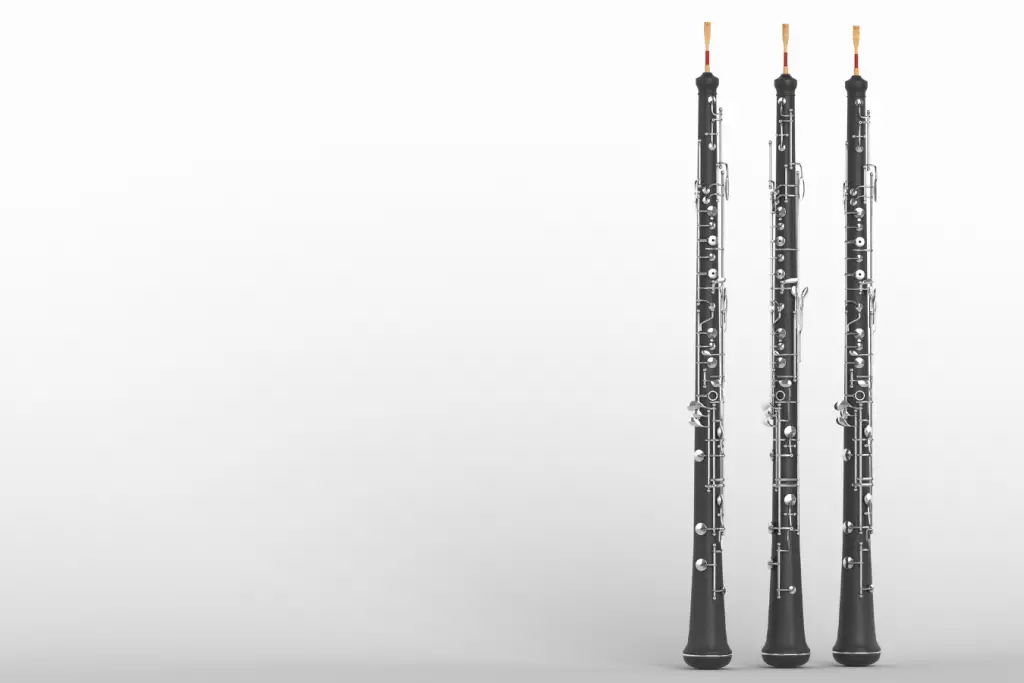
Oboes are typically made of wood, with a conical bore and a flared bell at the bottom. The instrument consists of three main sections: the upper joint, lower joint, and bell.
Players produce sound by blowing through a double reed, which vibrates to create the oboe’s characteristic timbre. The reed is inserted into the top of the upper joint.
The oboe’s key system is complex, with numerous keys and tone holes allowing players to produce a wide range of notes. Most modern oboes have a range of about two and a half octaves.
Intonation on the oboe can be challenging due to its sensitivity to changes in air pressure and temperature. Reed-alone exercises can help players develop better control over pitch.
Proper embouchure and breath support are essential for playing the oboe in tune. Players must maintain consistent air pressure and adjust their embouchure to fine-tune pitch.
The oboe’s pitch can be affected by factors such as reed quality, air temperature, and playing technique. Regular practice and attention to these elements can help improve intonation.
Embouchure Techniques
Proper embouchure technique is crucial for playing the oboe in tune. It involves forming the correct mouth shape and making subtle adjustments to control pitch and tone quality.
Forming the Embouchure
The oboe embouchure starts with relaxing the jaw and letting it open naturally while gently keeping the lips closed. Avoid introducing tension in the jaw. Create an “ooh” vowel shape with the mouth, as in “rhymes” or “soon.” This forms a cushion for the reed to rest on.
Fold the lips over the teeth to create a firm but flexible surface. The upper and lower lips should meet at the tip of the reed, with about 1/3 of the reed inside the mouth. Maintain an even pressure around the reed.
Keep the corners of the mouth firm to prevent air leakage. The chin should be flat and pointed slightly downward. Practice this embouchure formation in front of a mirror to ensure proper alignment.
Embouchure Adjustments for Intonation
Controlling intonation requires making minute adjustments to the embouchure. To lower pitch, slightly relax the embouchure and allow more reed into the mouth. To raise pitch, firm up the embouchure and take less reed in.
Focus on using the top lip for most intonation adjustments. Subtle changes in lip pressure can fine-tune pitch without altering the overall embouchure shape. Practice long tones while making these small adjustments to develop control.
Maintain a consistent air stream while adjusting the embouchure. Changes in air support can affect intonation as much as embouchure changes. Work on coordinating air and embouchure adjustments for precise pitch control.
Breath Control and Support
Proper breath control and support are crucial for playing the oboe in tune. The oboe requires more air pressure than most wind instruments to maintain a stable tone.
Oboists must pressurize the air using their muscles to achieve the optimal level for playing. This involves engaging the abdominal and intercostal muscles to control airflow.
A common exercise to improve breath support is playing long tones. Start with low notes and gradually move to higher registers, focusing on maintaining a consistent pitch and volume.
Reed-alone exercises can also help develop breath control. Practice producing the lowest possible sound at the loudest dynamic using just the reed.
Experimenting with tongue position can aid in breath control. Try arching the tongue or laying it flat to find the most comfortable and effective position for consistent airflow.
Regular breathing exercises away from the instrument can enhance overall breath support. Practice deep, diaphragmatic breathing to increase lung capacity and control.
Remember that proper posture is essential for effective breath support. Sit or stand with a straight back and open chest to allow for maximum air intake and control.
Finger Positioning and Hand Posture
Proper finger positioning and hand posture are crucial for playing the oboe in tune. Players should aim for a relaxed and natural hand position to facilitate smooth and accurate finger movements.
The left hand should be placed on the upper joint of the oboe. The thumb rests on the thumb rest, while the index, middle, and ring fingers cover the top three holes. The pinky operates the side keys.
For the right hand, the thumb supports the instrument from underneath. The index, middle, and ring fingers cover the lower holes, while the pinky manages the lower keys.
Observing hand position in a mirror can help ensure correct form. Players should strive for a natural-looking position without tension.
Key points for optimal finger positioning:
- Keep fingers curved and relaxed
- Maintain a light touch on the keys and holes
- Avoid excessive pressure or tension in the hands
- Position fingertips to cover holes completely
The half-hole technique, often used by the left index finger, requires special attention. This technique involves partially covering a hole to produce certain notes accurately.
Regular practice of scales and finger exercises can improve dexterity and muscle memory, contributing to better intonation. Players should focus on smooth, efficient finger movements to enhance their overall performance.
Tuning Basics
Proper tuning is essential for playing the oboe in tune. It requires developing a keen ear and understanding how to make adjustments using both the instrument and your embouchure.
Using a Tuner
A tuner is an invaluable tool for oboe players. Electronic tuners provide visual feedback on pitch accuracy. Position the tuner where you can easily see it while playing.
Start by tuning to the standard A440 pitch. Play a steady, mid-range A and observe the tuner. Aim for the needle to stay centered.
Adjust your embouchure to bring sharp or flat notes into tune. For persistent pitch issues, consult with a teacher about reed adjustments.
Practice tuning regularly to develop muscle memory and pitch awareness. Work on problem notes individually before addressing them in musical passages.
Listening and Adjusting
Developing a discerning ear is crucial for playing in tune. Listen carefully to yourself and others in ensemble settings.
Play long tones and focus on pitch stability. Use a drone or tuning CD to practice matching pitch perfectly. This helps train your ear to recognize subtle pitch variations.
When playing with others, constantly listen and adjust. Be aware of how temperature affects pitch. As the instrument warms up, it tends to play sharper.
Learn to make quick adjustments using your embouchure and air support. Relax your jaw and open your oral cavity to lower pitch. Increase air pressure to raise it slightly.
Practice tuning intervals and chords to improve harmonic awareness. This skill is especially important when tuning an orchestra as the principal oboist.
Reed Adjustment and Maintenance
Proper reed adjustment and maintenance are crucial for playing in tune on the oboe. A well-adjusted reed allows for better control of pitch, tone quality, and responsiveness across all registers.
Choosing the Right Reed
Selecting an appropriate oboe reed is the first step in achieving good intonation. Look for reeds with a balanced shape and consistent thickness. The opening should be slightly oval, not too round or closed.
Consider the following factors when choosing a reed:
- Hardness: Softer reeds are easier to play but may lack stability
- Responsiveness: The reed should vibrate easily with minimal effort
- Pitch: Test the reed’s pitch tendency in different registers
Experiment with different reed styles and strengths to find what works best for your embouchure and playing style.
Making Minor Reed Adjustments
Adjusting oboe reeds can significantly improve intonation and playability. Start by soaking the reed in water for a few minutes before making any changes.
Common adjustments include:
- Scraping the tip to increase responsiveness
- Thinning the heart to lower pitch
- Adjusting the opening for better control
Use a sharp reed knife and make small, gradual changes. Test the reed frequently during adjustments to avoid over-scraping.
Reed Care and Longevity
Proper care extends reed life and maintains consistent performance. After playing, gently clean the reed with water and allow it to dry completely before storing.
Tips for reed care:
- Use a reed case to protect from damage
- Rotate between multiple reeds to prevent overuse
- Avoid extreme temperatures and humidity
Regularly inspect reeds for signs of wear or mold. Replace reeds when they become unresponsive or difficult to control. With proper care, a good reed can last several weeks of regular playing.
Playing Techniques for Intonation
Mastering intonation on the oboe requires focused techniques and consistent practice. The following subsections explore key aspects of articulation and dynamic control that significantly impact pitch accuracy.
Articulation and Intonation
Flexing the top lip is a crucial technique for oboe intonation. Players can manipulate pitch by pushing the reed out slightly or pulling it in with their upper lip.
Proper tongue placement also affects intonation. Oboists should position their tongue to create a focused airstream, enhancing pitch control.
Experimenting with different reed positions in the mouth can help fine-tune pitch. Slight adjustments can make a noticeable difference in intonation.
Regular reed-alone exercises improve embouchure control and wind management, both crucial for consistent intonation.
Dynamic Control
Maintaining pitch accuracy across various dynamic levels is essential for oboists. Low notes tend to be flat except when played very softly, while half-hole notes often lean sharp.
To combat these tendencies:
- Practice long tones at different volumes, focusing on pitch stability
- Use a tuner to monitor intonation changes during crescendos and diminuendos
- Adjust embouchure pressure and air support to maintain pitch at varying dynamics
Developing a keen ear for pitch variations at different volumes is crucial. Regular practice with drones or accompaniment helps oboists refine their dynamic intonation skills.
Practicing Intonation
Developing good intonation on the oboe requires consistent practice and focused exercises. Key techniques include working on long tones, training the ear with interval exercises, and using drone tones as a reference point.
Long Tones
Long tones help oboists develop stable pitch and breath control. Start by playing sustained notes for 8-12 seconds each across the oboe’s range. Focus on maintaining a steady, centered pitch without wavering. Use a tuner to check your intonation and make small adjustments with your embouchure.
Try playing crescendos and decrescendos while keeping the pitch stable. This helps develop control over dynamics without altering pitch. Practice long tones daily, gradually increasing duration as your breath control improves.
Intonation exercises like slurred broken octaves can also be beneficial. Play from low G to high G, then low A to high A, continuing up to high C. This helps train your ear and embouchure for consistent intonation across registers.
Interval Training
Interval training sharpens your ability to hear and produce precise pitch relationships. Start with simple intervals like octaves, fifths, and fourths. Play the lower note, then the upper note, focusing on accurate tuning.
Use a tuner to check your accuracy, but also trust your ear. Listen for the “beats” or wavering sound when intervals are slightly out of tune. Aim to eliminate these beats for pure intervals.
Gradually progress to more challenging intervals like thirds, sixths, and sevenths. Practice both ascending and descending intervals. This comprehensive approach will improve your overall intonation and pitch awareness on the oboe.
Using Drones
Drones provide a constant pitch reference, helping you develop a more accurate sense of intonation. Start by using a drone tone on the oboe’s tuning note, typically A4 (440 Hz). Play long tones against this drone, focusing on blending your pitch perfectly.
Expand to other notes, playing scales and arpeggios against various drone pitches. This practice with drone tones helps you internalize correct pitch relationships across the instrument’s range.
Electronic tuners or smartphone apps can generate drone tones. Alternatively, record yourself playing a sustained note to use as a reference. Regular practice with drones will significantly improve your ability to play in tune consistently.
Advanced Intonation Techniques
Oboists can refine their intonation through several advanced techniques. Playing slurred broken octaves from G through C helps test reed intonation. This exercise involves slurring from the lower octave to the higher octave for each note.
Maintaining proper jaw position is crucial for pitch control. The jaw should remain open and relaxed to allow for maximum resonance and projection. A tense or collapsed jaw often leads to sharpness in pitch.
Regular reed maintenance is essential. Playing on old reeds can negatively impact intonation. Oboists should replace reeds approximately every 2.5 weeks for optimal performance.
Temperature awareness is important. The oboe performs best at room temperature, so players should allow their instrument to acclimate before playing.
Understanding the oboe’s natural pitch tendencies is vital. Certain notes are inherently out of tune:
- Moderately sharp: F#, high C, high D
- Moderately flat: low Bb, middle C#, high G
Players can compensate for these tendencies through embouchure adjustments and alternate fingerings.
Experienced oboists also utilize harmonics and key additions to fine-tune their pitch. This advanced technique requires a deep understanding of the instrument’s acoustics and mechanics.
Performing with Others
Playing in tune with an ensemble requires attentive listening and adaptive skills. Oboists must balance their distinctive timbre with other instruments while adjusting to the group’s overall intonation.
Blending
Oboists should focus on matching their tone quality and volume to the ensemble. This involves careful breath control and embouchure adjustments. Listen closely to other players and aim to complement rather than overpower them.
In softer passages, reduce air pressure and relax the embouchure slightly. For louder sections, increase support from the diaphragm while maintaining a stable embouchure.
Consider the oboe’s role in each piece. When playing melody, project clearly but avoid dominating. In harmonic passages, blend more by softening the tone’s edge.
Adjusting to Others’ Tuning
Flexibility is key when playing with others. The oboist must be prepared to adjust pitch constantly. Use long tones during warm-ups to practice quick pitch alterations.
Pitch is relative in ensemble playing. An oboist’s perfectly tuned ‘A’ may need adjustment to fit the group’s intonation. Be ready to compromise for the sake of overall harmony.
Develop the habit of checking tuning against other instruments, especially those sharing your melodic line. Quick pitch adjustments can be made by:
- Altering embouchure pressure
- Adjusting reed placement
- Using alternative fingerings for problem notes
Regular practice with tuners and drones helps develop a keen sense of pitch, essential for rapid adjustments in ensemble settings.