
Flutes are some of the oldest musical instruments known to humanity, with evidence of their existence dating back thousands of years. A notable early example was found in the Divje Babe Cave in Slovenia, believed to be over 40,000 years old, indicating a deep-rooted presence in musical tradition. These ancient instruments paved the way for the diverse and sophisticated flutes used in modern music today.
Understanding the mechanics of a flute involves recognizing its classification as a woodwind instrument, though it can be made from metal or wood. The sound of a flute is produced when a player’s air stream vibrates within the instrument by crossing the edge of the embouchure hole. This interaction creates variations in pitch and volume, based on how the musician manipulates the column of air within the tube. Different approaches, such as cross-fingerings, are used to achieve various notes.
Musicians who play the flute are often fascinated by its design and the intricate acoustics that allow it to produce sound. Each flute has a mouth hole where the breath acts as a generator, fluctuating the airstream rapidly between the inside and outside of the hole. Exploring the nuances of flute acoustics deepens our appreciation for this ancient instrument’s continued relevance in diverse musical genres.
Fundamentals of the Flute
The flute operates as a woodwind instrument that produces sound without the use of reeds. Essential components include the head joint, where the player’s breath creates vibrations, and the embouchure hole that directs the air. Additionally, different types of flutes and construction materials influence the sound characteristics.
Anatomy of the Flute
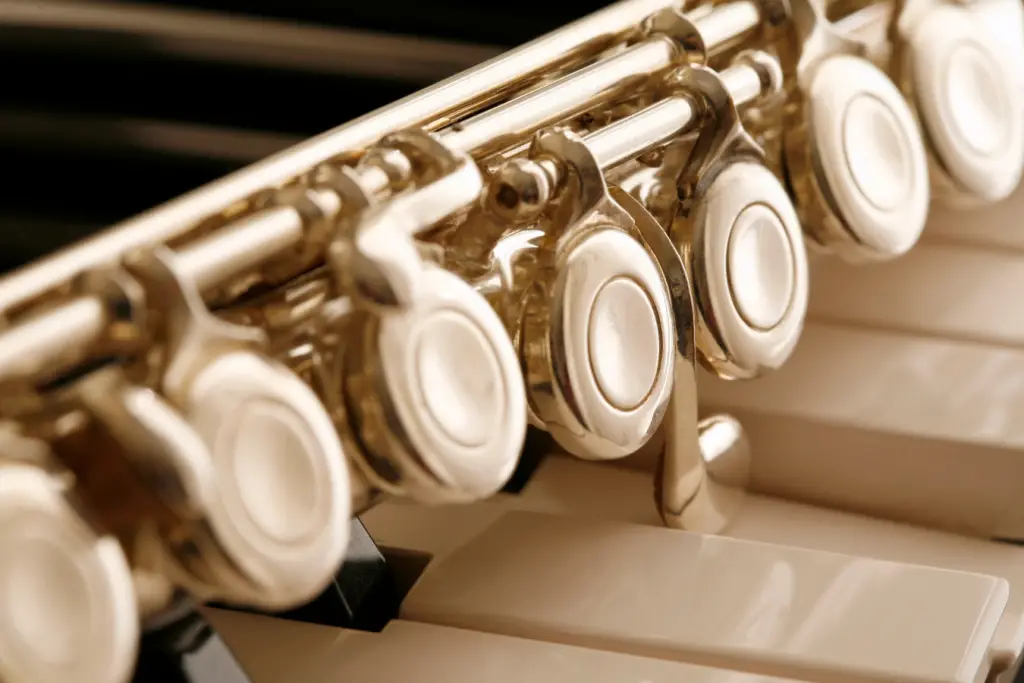
The flute is primarily divided into the head joint, body, and foot joint. The head joint is crucial, featuring the mouth hole or embouchure hole. This is where the player directs air to produce sound vibrations. Modern flutes often have a lip plate to help position the player’s lips more comfortably. The body of the flute, containing a series of keys and pads, allows the musician to produce different notes by opening and closing these holes. These keys are operated by the fingers, enabling fluid transitions between notes. The foot joint, at the end of the instrument, extends the range of notes the flute can play, commonly down to a C or a B in concert flutes.
Materials and Types
Flutes are crafted from various materials, each impacting the tone and playability. Traditionally, flutes were made from wood, but modern flutes often use metals like silver, nickel, or gold. These materials not only affect the sound but also the instrument’s weight and feel. Several types of flutes exist within different families. The concert flute, known as a transverse flute, is widely used in classical music. The baroque flute offers a different sound characteristic due to its simpler design and harder fingerings. Other less common flutes include the piccolo, alto, and bass flutes, each adding unique tonal qualities to music ensembles.
Mechanics of Sound Production
Flutes produce sound as the player blows air across the embouchure hole. This action generates sound waves that resonate within the tube of the instrument. The flow of air splits at the edge of the mouth hole, creating vibrations that travel back and forth through the air column inside the flute. The openings along the tube allow the musician to control pitch. Closing keys shortens the air column, raising the pitch, while opening them lengthens it, lowering the pitch. The absence of reeds characterizes it as a unique member of the woodwind family, with its timbre affected by the instrument’s material and design.
Playing Techniques
Understanding essential flute playing techniques is crucial for every flutist aiming to enhance their musical skills. This includes developing a precise embouchure, mastering fingerings, and maintaining proper breath control.
Mastering Embouchure
Establishing a good embouchure is vital for producing a clear and consistent tone on the flute. The lip aperture should be small and controlled, with the lower lip positioned slightly over the lip plate. Positioning the hole directly under the center of the bottom lip supports sound quality. Flutists must experiment with minor adjustments to achieve optimal resonance and clarity in their tone. Proper posture aids in maintaining a steady embouchure, allowing flautists to explore dynamics and enhance vibrato effectively.
Fingerings and Tone Holes
Mastering fingerings is essential for controlling pitch and producing accurate notes. Each finger corresponds to specific tone holes, and fluency in transitioning between these is necessary. A well-balanced hand position prevents unnecessary tension. Practicing fingerings slowly at first helps develop muscle memory, allowing for fluid and rapid changes in music pieces. Flutists should pay attention to tuning as even slight changes in the position of fingers over tone holes affect the pitch. Utilizing diagrams or charts can assist in memorizing standard fingerings, enhancing the player’s confidence and technical skill.
Breathing and Air Stream Control
Effective breathing is critical for sustaining notes and phrases in flute playing. Employing diaphragmatic breathing ensures a steady air stream, providing control over volume and tone. Breath support is maintained by engaging the diaphragm, allowing for longer phrases without breaks. Flutists should practice controlling the air stream by varying its speed and direction, influencing the tone’s richness and resonance. This is especially important for dynamic control and playing the flute, where a stable posture supports breath management. Proper air stream control enables flautists to express diverse musical expressions and styles effectively.
Acoustics and Physics of the Flute
The flute’s sound is crafted through a mix of controlled airflow, precise finger placement, and the instrument’s physical structure. Central to understanding its function are concepts such as pitch, vibration, and acoustic pressure, each crucial to producing the flute’s distinctive melodic tones.
Sound Pitch and Harmonics
Pitch in the flute is determined by the speed and pattern of air vibrated within the tube. Flutists manipulate pitch through finger placements, effectively shortening or lengthening the tube to adjust the note.
The flute covers a range of three octaves, making it a versatile instrument in various musical genres. Harmonics are produced as the player increases air pressure, introducing overtones that add complexity and richness to the sound. These overtones create a harmonic series, allowing variations in sound quality and note clarity essential for expressive performance.
Oscillation and Resonance
Oscillation and resonance are fundamental to the flute’s sound production. As air is blown into the flute, it oscillates against the embouchure hole’s edge, setting up waves within the instrument. This oscillating movement, combined with the flute’s physical geometry, establishes resonance, amplifying specific frequencies.
The embouchure, as a key component, lets the player control airflow, creating variations in oscillation patterns that influence the resulting sound. An understanding of these physical interactions is vital for players to adjust tone and achieve desired musical effects.
Acoustic Pressure and Standing Waves
Acoustic pressure within the flute is essential for sound production. As air is pushed through, it creates a pressure wave that travels along the tube. These waves form standing waves when they reflect off the closed end, with nodes and antinodes characterizing these waves at different lengths.
The presence of pressure nodes and antinodes defines the pitch and quality of the note produced. By understanding and manipulating these waves, flutists can finely tune each sound. This interplay between air pressure, standing waves, and flute design showcases the intricate physics involved in crafting melodious tones.
Flute Variations and History
Flutes have evolved through various forms and have significant cultural importance across the globe. They range from the ancient designs of the prehistoric era to sophisticated instruments integral to modern orchestras.
Evolution and Innovations
The flute’s journey began over 35,000 years ago, with the oldest known examples crafted from bird bones and mammoth ivory, found in present-day Germany. These early instruments were simple hollow tubes with strategically placed holes. As time progressed, the flute developed distinct variations like the baroque flute, which featured more intricate designs suited for classical music compositions of its time.
In modern times, the flute is predominantly made of metal and features a Boehm system with complex mechanisms to produce a wide range of notes. The Indian bansuri and the Native American flute showcase regional innovations, highlighting differences in construction and cultural context. Each of these variations reflects advancements in craftsmanship and technology, demonstrating the dynamic evolution of the flute.
Cultural Significance
Flutes hold a prominent place in numerous cultural traditions and ceremonies. The bansuri is central to Indian classical music and is revered for its association with Hindu deities. Its bamboo construction and simple design offer a mellow and soothing sound essential to its music tradition.
The Native American flute uniquely resembles the voice due to its distinct sound, often used in rituals, storytelling, and spiritual practices. Other regional variations have their own symbolism and applications within their cultures. Through various adaptations, flutes provide a vital connection between musical traditions and their respective cultural identities.