
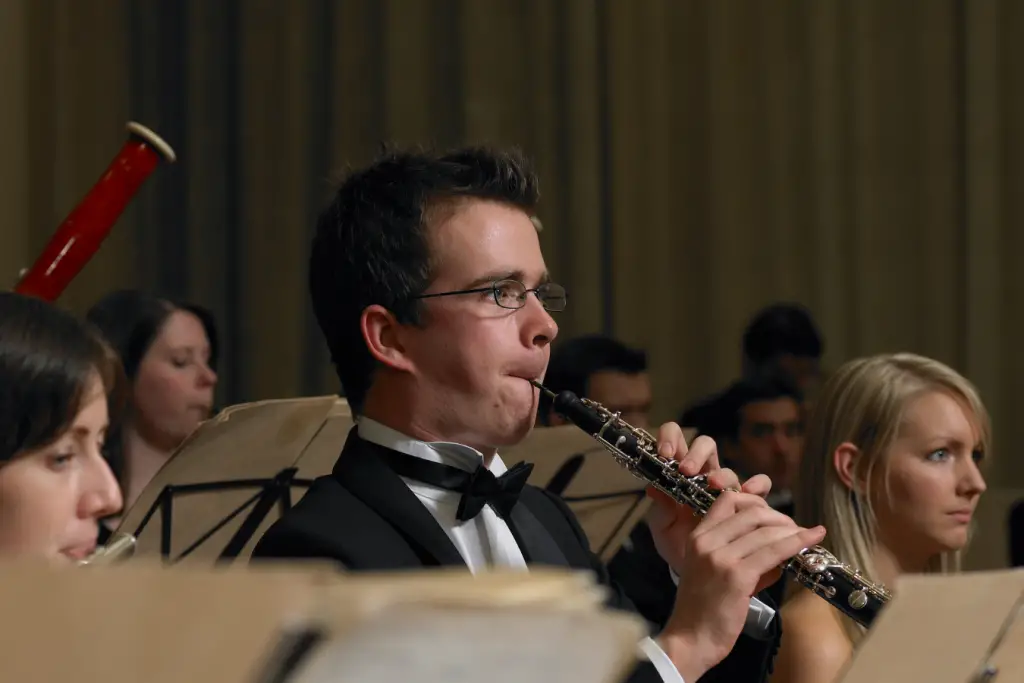
The oboe, with its distinctive timbre, plays a crucial role in both orchestras and bands. Oboists can contribute their unique sound to various ensemble types, from symphony orchestras to concert bands and even some jazz groups. This versatility makes the oboe an appealing instrument for musicians seeking diverse performance opportunities.
In orchestras, the oboe often takes center stage, leading the tuning process before performances and playing prominent melodic lines. Its piercing yet sweet tone cuts through the texture, making it ideal for solos and expressive passages. Band settings also welcome the oboe, where it complements other woodwinds and adds depth to the ensemble’s sound palette.
While the oboe’s role may differ slightly between orchestras and bands, both settings offer rewarding experiences for players. The instrument’s adaptability allows oboists to explore a wide range of musical genres and styles, from classical masterpieces to contemporary compositions.
Exploring the Role of the Oboe in Music Ensembles
The oboe plays a crucial role in various musical ensembles, contributing its unique timbre and versatility. Its distinctive sound and technical capabilities make it an essential component of orchestras and bands alike.
Characteristics of the Oboe in Ensemble Settings
The oboe’s piercing and expressive tone allows it to stand out in ensemble settings. It adds color, depth, and emotional expression to the music, making it a valuable asset in orchestras.
In many ensembles, the oboe is responsible for tuning the entire group. This tradition stems from its ability to produce a clear, steady pitch that other instruments can easily match.
The oboe often carries melodic lines and solos due to its projecting sound. Its agility allows for intricate passages and ornamentations, enhancing the overall musical texture.
Comparison with Other Woodwind Instruments
The oboe’s timbre sets it apart from other woodwinds. While flutes have a breathy quality and clarinets offer a mellow tone, the oboe provides a bright, reedy sound that cuts through the ensemble.
In terms of range, the oboe sits between the flute and clarinet. This positioning allows it to blend with both higher and lower woodwinds, creating a cohesive section sound.
Unlike single-reed instruments like saxophones and clarinets, the oboe uses a double reed. This unique mouthpiece contributes to its distinctive tone and requires specialized playing techniques.
The oboe’s role often includes playing countermelodies or harmonies to support the main themes presented by other instruments. Its ability to sustain long notes makes it ideal for providing harmonic support in slow passages.
The Oboe in Orchestral Music
The oboe plays a crucial role in orchestral music, contributing its distinctive timbre and serving important functions. It holds a prominent position within the woodwind section and the orchestra as a whole.
Orchestral Repertoire for Oboe
The oboe features prominently in many orchestral works across various periods. Baroque composers like Bach and Handel frequently showcased the oboe in concertos and orchestral pieces. In the Classical era, Mozart and Beethoven incorporated oboe solos in their symphonies and chamber works.
Romantic composers expanded the oboe’s role. Tchaikovsky’s “Swan Lake” and Dvorak’s “New World Symphony” contain notable oboe solos. Modern composers like Stravinsky and Ravel continued to utilize the oboe’s expressive capabilities.
Contemporary orchestral music often explores the oboe’s extended techniques, pushing the boundaries of its traditional sound.
Position and Responsibilities of the Oboist
In a standard orchestra seating arrangement, the principal oboist sits at the front of the woodwind section, typically to the conductor’s left. This position reflects the oboe’s importance and allows for clear communication with other wind players and the conductor.
The principal oboist’s responsibilities include:
- Playing solo passages
- Leading the woodwind section
- Cueing entrances for other wind instruments
- Maintaining consistent intonation
Oboists often tune the orchestra by playing the reference pitch at the start of rehearsals and performances.
Tuning and Leadership within the Wind Section
The oboe’s role in orchestral tuning is significant. Its clear, steady tone makes it ideal for providing a reference pitch. At the beginning of a performance, the principal oboist plays a concert A (typically A440), to which the entire orchestra tunes.
This tuning process follows a specific order:
- Woodwinds
- Brass
- Strings
The oboist listens to fixed-pitch instruments like the piano when present, matching their pitch before giving the tuning note to the orchestra.
Beyond tuning, the oboist often leads the wind section in matters of phrasing, articulation, and breathing. This leadership helps maintain cohesion within the woodwinds and contributes to the overall precision of the orchestra’s performance.
Participating in Bands with the Oboe
The oboe plays diverse roles in various band settings, from traditional concert bands to more experimental jazz ensembles. Its distinctive timbre and technical capabilities allow for unique contributions across musical genres.
Roles in Concert Bands
In concert bands, the oboe often takes on a prominent role. It frequently plays melody lines and important solos due to its clear, penetrating tone. The oboe’s sound cuts through the ensemble, making it ideal for expressive passages.
Oboists in concert bands typically sit near the front, often beside the flutes and other woodwinds. They may be called upon to play the tuning note for the entire ensemble, as the oboe’s stable pitch serves as a reliable reference.
In larger bands, there may be multiple oboe parts, with first and second oboe positions. The first oboe usually handles more challenging melodic lines, while the second oboe provides harmonic support.
Oboe in Jazz and Popular Music Bands
While less common, the oboe can add a unique flavor to jazz and popular music ensembles. Its distinctive sound can provide interesting textures and solo voices in these non-traditional settings.
In jazz bands, oboists may need to adapt their technique for improvisation and swing rhythms. Some contemporary jazz composers and arrangers specifically write parts to showcase the oboe’s capabilities.
Popular music bands occasionally incorporate oboe for its exotic timbre. It can be especially effective in ballads or as a counterpoint to more conventional pop instruments.
Oboists in these settings often need to be versatile, potentially doubling on other woodwind instruments to increase their utility in the ensemble.
Adapting Oboe Technique for Band Settings
Playing oboe in a band requires some adjustments to traditional orchestral technique. Oboists must project their sound more forcefully to be heard over brass and percussion instruments.
Breath control becomes crucial in band settings. Oboists need to manage their air efficiently to sustain long phrases and maintain consistent tone quality throughout dynamic ranges.
Articulation may need to be crisper and more defined in band music. This helps the oboe’s sound cut through the texture of the ensemble, especially in faster or more rhythmic passages.
Intonation requires extra attention in bands. Oboists must listen carefully and adjust their pitch to blend with other woodwinds and harmonize effectively with brass instruments.
Preparation for Playing in Ensembles
Playing the oboe in a band or orchestra requires specific skills and preparation. Musicians must focus on technical proficiency, breath control, and sight-reading abilities to perform effectively in ensemble settings.
Technical Skills and Articulation
Mastering technical skills is crucial for oboe players in ensembles. Proper fingerings and embouchure are essential for producing clear, in-tune notes. Players should practice scales, arpeggios, and etudes regularly to improve dexterity and tone quality.
Articulation techniques, such as tonguing and slurring, must be refined. Ensemble playing often requires precise and varied articulation styles. Oboists should work on different articulation patterns in their daily practice routine.
Intonation is critical in group settings. Players need to develop a keen ear for pitch and learn to adjust quickly. Regular use of a tuner during practice helps build this skill.
Breath Control and Endurance
Effective breath control is vital for oboe players in ensembles. The oboe requires constant air support, and musicians must learn to manage their breath efficiently. Practicing long tones helps develop breath control and improves tone quality.
Circular breathing, while advanced, can be a valuable skill for sustaining long phrases. Players should gradually incorporate this technique into their practice routine.
Building endurance is essential for lengthy rehearsals and performances. Regular practice sessions should gradually increase in duration to improve stamina. Proper posture and relaxation techniques help prevent fatigue during extended playing periods.
Sight-Reading and Part Preparation
Strong sight-reading skills are crucial for ensemble players. Regular practice with unfamiliar music improves this ability. Oboists should set aside time each day to read through new pieces at various tempos.
Preparing individual parts before rehearsals is essential. Players should mark breath points, difficult passages, and important cues in their music. Understanding the context of the oboe part within the full score helps with interpretation and ensemble awareness.
Listening to recordings of the pieces being performed can provide valuable insights. This practice helps oboists understand their role in the overall musical texture and anticipate challenging sections.
Collaboration and Communication
Playing the oboe in a band or orchestra requires strong teamwork skills. Musicians must work together seamlessly to create harmonious performances.
Rehearsal Etiquette
Oboe players should arrive early to rehearsals with their instrument assembled and ready. Being punctual shows respect for fellow musicians and the conductor. Bring all necessary materials, including sheet music, pencils, and spare reeds.
During rehearsals, remain attentive and avoid unnecessary talking or movements. Mark your music as instructed and take notes on dynamics, tempos, and other directions. When not playing, listen carefully to other sections to understand how your part fits into the overall composition.
Be prepared to tune frequently, as the oboe is often used to tune the entire ensemble. Respond quickly when the conductor asks for tuning notes.
Following the Conductor
The conductor serves as the ensemble’s guide, setting tempos and shaping the music’s interpretation. Watch the conductor closely, especially during entries, tempo changes, and dynamic shifts. Learn to interpret conducting patterns and gestures to stay in sync with the group.
Maintain peripheral awareness of the conductor even when reading your music. Practice looking up frequently during individual practice to develop this skill. Respond immediately to the conductor’s cues for starts, stops, and changes in volume or expression.
Be prepared to adjust your playing based on the conductor’s feedback. This may involve altering your tone, articulation, or phrasing to better blend with the ensemble.
Interacting with Fellow Musicians
Develop positive relationships with other musicians, especially those in your section and nearby instruments. Collaborate by sharing techniques and discussing challenging passages. Offer constructive feedback when appropriate, and be open to receiving suggestions from others.
In wind ensembles, work closely with other woodwinds to match pitch and blend tones. Pay special attention to intonation with flutes and clarinets, as these instruments often play similar parts.
During breaks, engage in constructive conversations about the music. Share insights on interpretation and technical challenges. This fosters a supportive environment and improves the overall quality of performances.
Challenges and Considerations
Playing the oboe in a band or orchestra comes with unique difficulties. Musicians must navigate technical hurdles, maintain their instruments, and balance their sound within ensembles.
Common Challenges for Oboists
Oboists face several obstacles when performing in groups. The oboe’s small keys and tight fingerings can cause discomfort and potential injury with extended playing. Proper posture and technique are crucial to avoid physical strain.
Breath control is another significant challenge. Oboists must develop strong facial muscles and lung capacity to perform effectively. The instrument requires precise embouchure control and consistent air support.
Intonation can be tricky, especially in ensemble settings. Oboists must constantly adjust their pitch to blend with other instruments. This demands acute listening skills and the ability to make quick corrections.
Instrument Maintenance and Reed Making
Oboe maintenance is time-consuming and critical for optimal performance. Regular cleaning and oiling of the instrument are essential to prevent key sticking and ensure smooth operation.
Reed making is a complex and ongoing task for oboists. Each reed is handcrafted and requires significant skill to produce. Oboists often spend hours perfecting their reeds, which directly affect tone quality and ease of playing.
Environmental factors like temperature and humidity can impact reed performance. Oboists must be prepared to adjust their reeds or switch to alternatives during performances.
Amplification and Balance in Different Settings
Balancing the oboe’s sound within an ensemble presents unique challenges. The instrument’s distinctive timbre can easily overpower other sections if not carefully controlled.
In orchestral settings, oboists must blend with other woodwinds while projecting during solos. This requires exceptional dynamic control and awareness of the overall ensemble sound.
Amplification in large venues or outdoor performances can be problematic. The oboe’s delicate tone may be lost without proper microphone placement and sound engineering. Oboists must work closely with sound technicians to achieve optimal amplification without distorting their natural sound.
Opportunities and Auditions
Aspiring oboists can pursue various avenues to showcase their skills and join musical ensembles. These range from community groups to professional orchestras, each offering unique experiences and challenges.
Finding Opportunities to Play
Community bands and orchestras often welcome oboists without requiring formal auditions. These groups provide valuable experience for players of all levels. Local music schools and universities may also have ensembles open to community members.
For more advanced players, professional orchestras hold auditions for open positions. These opportunities can be found through orchestra websites and job boards. Some orchestras offer academy programs for young musicians, providing a bridge between education and professional careers.
Regional and youth orchestras are excellent stepping stones for developing players. They often have less competitive audition processes while still offering high-quality performance experiences.
Preparing for Auditions
Successful auditions require thorough preparation. Oboists should focus on perfecting standard audition repertoire, which typically includes orchestral excerpts and solo pieces.
Regular practice of scales, arpeggios, and etudes is essential for technical proficiency. Sight-reading skills are also crucial, as many auditions include this component.
Mock auditions with peers or teachers can help simulate the pressure of a real audition. Recording practice sessions allows for self-critique and improvement.
Attention to equipment is vital. Ensure reeds are in top condition and the instrument is well-maintained before auditions.
Continued Education and Masterclasses
Ongoing education is key to an oboist’s development. Summer music festivals offer intensive training and performance opportunities. Many feature masterclasses with renowned oboists.
Attending workshops and conferences, such as those hosted by the International Double Reed Society, can provide valuable insights and networking opportunities.
Private lessons with experienced oboists can address specific technical challenges and refine musical interpretation. Online platforms now offer access to lessons with world-class players, regardless of location.
Universities and conservatories often allow non-degree students to audit classes or take part in ensembles, providing structured learning opportunities for adult players.