
Learning to play the bassoon takes dedication, patience, and consistent practice. As a beginner, developing proper technique from the start is crucial for long-term success. Below are essential exercises that will help build your skill, strengthen your embouchure, improve finger dexterity, and enhance your overall tone quality.
1. Warm-Up Exercises
Warming up before playing helps prevent strain and prepares your muscles for practice. Here are a few simple warm-ups:
- Long Tones: Play each note for at least 8-10 seconds, focusing on steady airflow and a smooth tone.
- Breath Support Drill: Inhale deeply, then exhale slowly while playing a comfortable note, ensuring a controlled, even sound.
- Sirens: Glide smoothly from low to high notes and back down to improve flexibility.
2. Embouchure Strengthening Exercises
Your embouchure (lip and mouth position) plays a crucial role in tone production. Strengthen it with these exercises:
- Reed Alone Practice: Play on the reed without the bassoon, focusing on a steady and controlled sound.
- Lip Flexibility Drill: Play a note and adjust your embouchure slightly to bend the pitch up and down.
- Buzzing on the Reed: Mimic the embouchure as if playing, creating a steady “buzzing” sound.
3. Finger Dexterity and Coordination
Quick and accurate finger movements are essential for fluid playing. Try these finger exercises:
- Slow Scales: Play major and minor scales at a slow pace, gradually increasing speed as you improve.
- Chromatic Scales: Move one half-step at a time to familiarize yourself with every key.
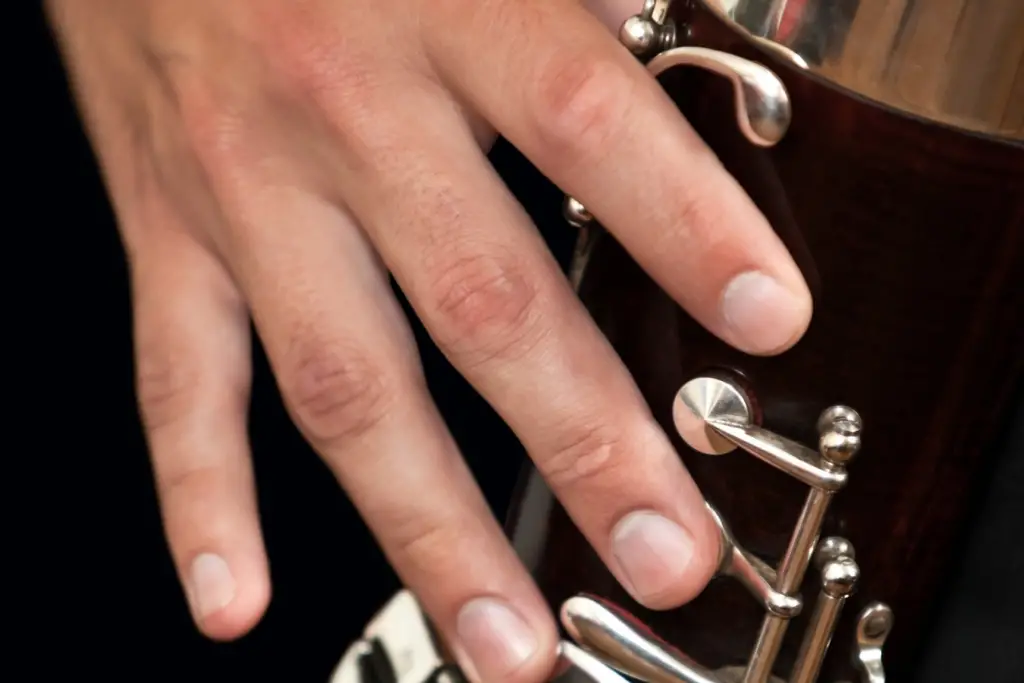
- Finger Lifting and Placement: Lift and place fingers on tone holes deliberately to develop muscle memory.
4. Articulation and Tonguing Exercises
Clear articulation is key to crisp and expressive playing. Improve your tonguing with these drills:
- Single Tonguing: Play repeated notes using “ta” or “da” syllables for articulation.
- Staccato Practice: Play short, separated notes at different speeds.
- Legato vs. Staccato: Alternate between smooth (legato) and detached (staccato) notes.
5. Intonation and Ear Training
Good intonation ensures that you play in tune with others. Work on your ear and pitch accuracy with these exercises:
- Tuning to a Drone: Play along with a fixed pitch (such as a tuner or piano) to develop intonation awareness.
- Interval Recognition: Play two notes back-to-back and listen for the distance between them.
- Recording and Listening: Record yourself and adjust your pitch as needed.
6. Rhythm and Timing Exercises
Keeping steady time is crucial for ensemble playing. Strengthen your rhythm with these tips:
- Metronome Practice: Play scales or passages at a slow tempo, gradually increasing speed.
- Clap Rhythms: Clap out complex rhythms before playing them on the bassoon.
- Subdivision Exercises: Break notes into smaller beats (eighths, sixteenths) to develop rhythmic accuracy.
7. Basic Sight-Reading Practice
Sight-reading improves your ability to play new music quickly and accurately:
- Daily Sight-Reading: Try a short new piece every day to build confidence.
- Reading in Different Keys: Practice scales and simple pieces in various key signatures.
- Follow Along with a Recording: Play along with recorded music to strengthen reading skills.
Conclusion
Building your skill on the bassoon requires patience and consistent practice. By incorporating these exercises into your daily routine, you’ll improve technique, tone, and musicality. Over time, you’ll find yourself playing with greater ease and confidence. Happy practicing!